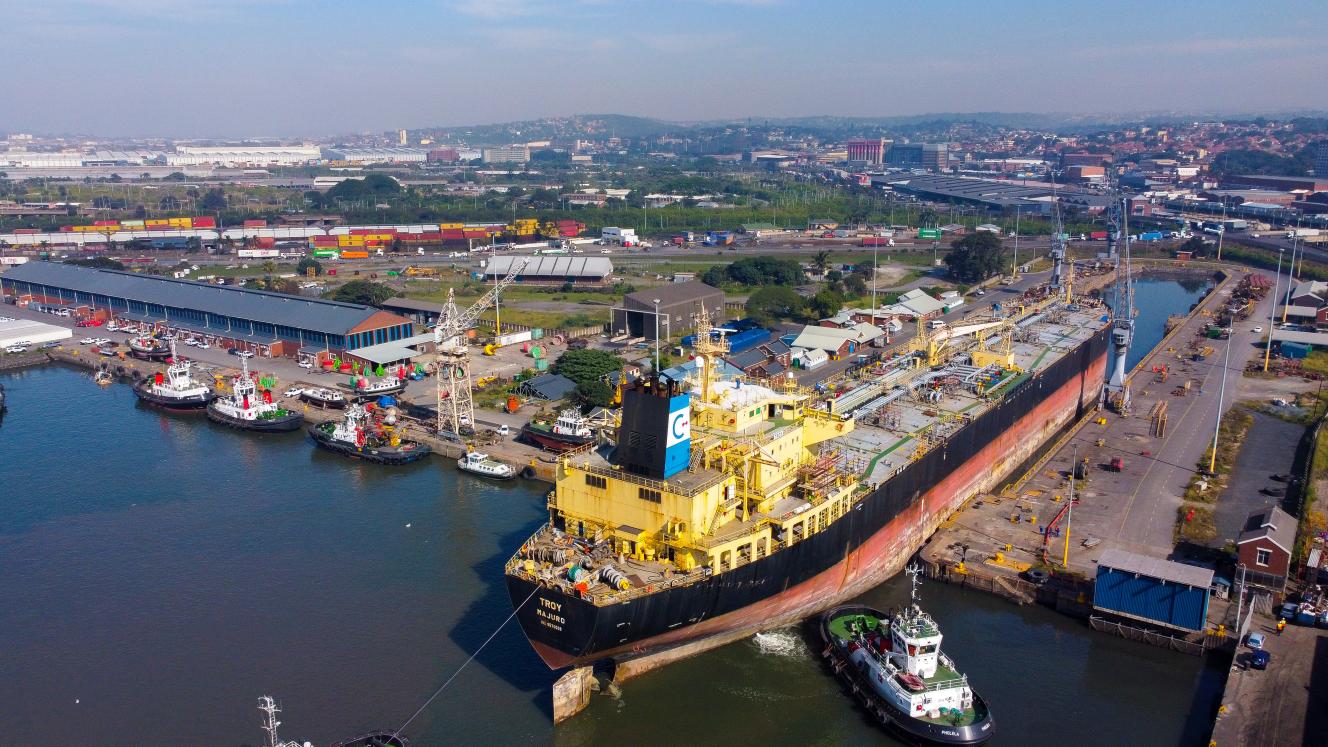
A flood of shipping lines have told FTW that they have, or are about to drop the contentious congestion surcharge imposed because of the Transnet workers’ strike, and the aftermath of a huge container backlog at all the SA ports. This after the first indication - an e-mail from Maersk Line’s SA MD, David Williams – announcing that the line was to withdraw the congestion recovery surcharge on July 5. “The charge remained applicable for all cargo gated-in up until midnight on Sunday July 4,” he said. Williams is also convinced that the line’s recovery is progressing well across all ports and services. “There have been many factors contributing to the improved recovery,” he added, “one of the most influential being the fixed berthing windows secured from Transnet Port Terminals (TPT) at the start of the year.” Its sister line in the AP Moller group, Safmarine, also informed us that they “anticipated” that they would be “back on track by July 5” and were also withdrawing the congestion surcharge from that date. This after the imposition of the surcharge on May 19 because the three week Transnet industrial action had resulted in what the Safmarine management described as “very considerable additional costs” as the strike “severely impacted all port operations” at SA’s ports. The surcharge, they added, “was aimed at recovering in part the costs” which they were continuing to incur. Safmarine also attributed some of the recovery to its “preferential berthing arrangements”. Those two were the start of the deluge. Deutsche Afrika Line (DAL) was to drop the surcharge from July 18, line executive, Neil Carrick, told FTW. Mitsui OSK Line (MOL) marketing manager, Iain McIntosh, said that Cape Town and the Port Elizabeth/Nqgura terminals “have returned to a reasonable state of normality” with little-orno berthing delays on its services. “But,” he added, “the situation in terms of recovery at both Pier 1 and Durban Container Terminal (DCT) in Durban still face considerable berthing delays of between 48-96 hours depending on service. But we hope that the recovery process by TPT continues successfully over the next few weeks.” It was therefore dropping the surcharge of US$70- per-TEU on July 8 – both for containers from foreign origin terminals which are destined for all SA ports, and export boxes sailing ex SA.Hamburg Sud’s MD, Sam Mofatt also told FTW that they had decided on June 28 to drop the surcharge from July 6. Pacific International Line (PIL) was also dropping the surcharge from July 8, MD Ian Naik said. Carol Graham, marketing director for car carriers, Hoegh Autoliner, had a slightly different story to tell. They had had “very little delay” on vessels calling at Port Elizabeth and Durban – with car terminal management also taking off their jackets and getting down to unloading the cars from the ships during the strike. “We, therefore, decided not to impose the surcharge,” Graham added. We also got words from Mark Frauendorf, acting container manager, via breakbulk manager, Lars Greiner, that Macs had also not imposed the surcharge on its multi-purpose services. Although it was also likely to drop the surcharge given improved conditions in the SA port system, Hapag Lloyd MD Holger Schwesig told us that they were “still discussing the surcharge issue” when we talked to him on June 30. The out-and-out exception to the rule is Mediterranean Shipping Company (MSC). Line marketing manager, Glen Delve told FTW: “We have received promises from DCT management that things were getting back to normal. But our own monitoring of the situation has not yet revealed this, and we are, therefore, not dropping our cost recovery surcharge (CRS). “We will continue reviewing it on a weekly basis, but we still have ships sitting outside the Durban harbour at anchorage, so it’s not the case yet.” Line executive, Dallas Sutton, also told FTW on July 5 that one of these ships had been quoted a 10-day berthing delay.
Lines lift surcharge
Comments | 0
© Now Media. This content is protected by copyright and may not be adapted or republished. If you would like to discuss cooperation opportunities, please contact: editor@freightnews.co.za.