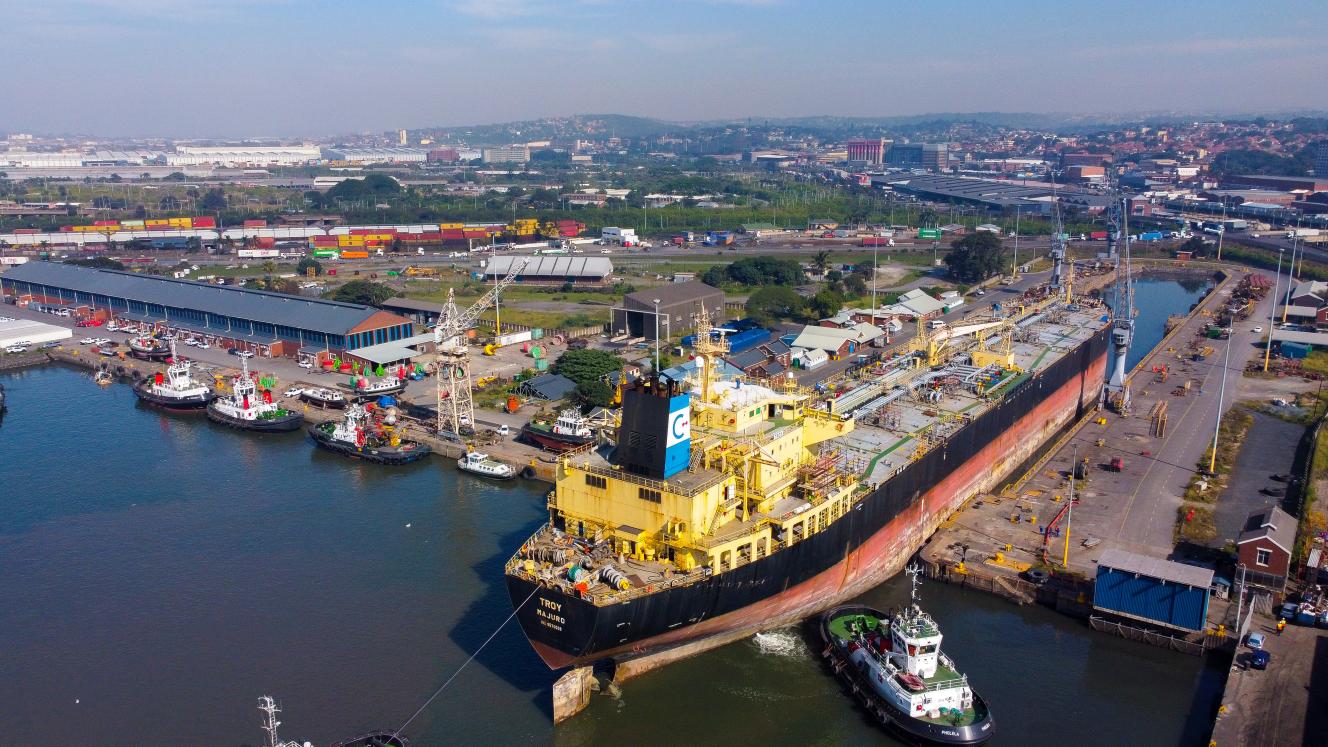
For both the new Incoterms, Delivery at Place (DAP) and Delivery at Terminal (DAT), delivery occurs at a named destination. In DAP, at the buyer’s disposal, but ready for unloading, whilst in DAT, at the buyer’s disposal unloaded from the arriving vehicle. Remember that for DAP the arriving “vehicle” may well be a ship, and the named place of destination may well be the port, while the named terminal in DAT may well be in the port. These are essentially “delivered” terms. The modes of transport, as detailed in last week’s issue, are divided into two groups, (i) “Rules for any Mode of Transport”, which include EXW, FCA, CPT, CIP, DAT, DAP, and DDP, while (ii) “Rules for Sea and Inland Waterway Transport” include FAS, FOB, CFR, and CIF. Although Incoterms were traditionally used in international contracts of sale, they had to account for the proliferation of trade blocs. As a consequence Incoterms now also have national application as the subtitle indicates “ICC Rules for the use of Domestic and International Trade Terms”. When consulting the ICC Incoterms®2010 publication you will find a “Guidance Note” before each term. This note explains the fundamentals of each term. The “Guidance Notes” are not part of the actual Incoterms®2010 rules, but are merely provided for ease of understanding. Electronic means of communication or EDI have now been given the same effect as paper communication, as long as the contracting parties so agree. Incoterms®2010 take account of the revision of the Institute Cargo Clauses. As a consequence the language relating to insurance has been altered in an effort to clarify the contracting parties’ obligations. Accounting for the heightened challenges relating to security, obligations have been allocated between buyers and sellers in order to render assistance in obtaining security-related clearances, such as chain of custody information. With reference to THC, under terms CPT, CIP, CFR, CIF, DAP, and DDP the seller must make arrangements for the carriage of the goods to the agreed destination. It is possible that the THC could become payable twice, and as a consequence the Incoterms®2010 rules clearly allocate the costs. In the sale of commodities, cargo is frequently sold several times during the course of the transit i.e. “down a string of buyers and sellers” – known as “String Sales”. As a consequence the seller in the middle of the string does not “ship” the goods because they have already been shipped. For clarification purposes Incoterms®2010 rules include the obligation of to “procure goods shipped” together with the obligation to “ship goods” in the relevant Incoterms rules. The altering of the Incoterms®2010 rules is not prohibited, but you should be aware that there are real dangers in doing so. Should you intend to make such alterations, you should clearly stipulate and articulate the changes in the contract of sale.
Learning more about Incoterms®2010
Comments | 0
© Now Media. This content is protected by copyright and may not be adapted or republished. If you would like to discuss cooperation opportunities, please contact: editor@freightnews.co.za.