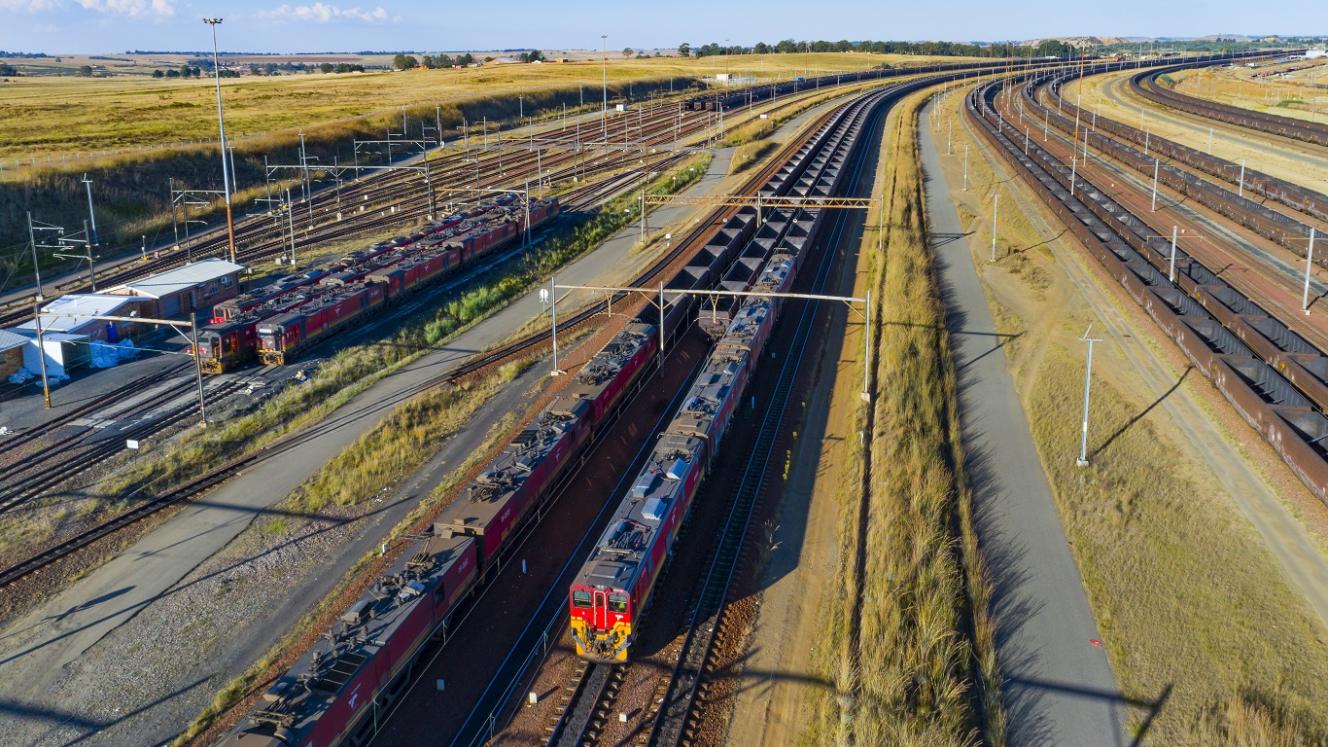
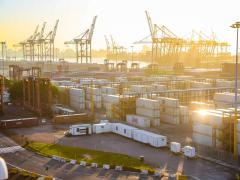
New manganese ore mining companies are taking their products to port the hard way, via road – a more expensive exercise than rail – as they have not yet received rail allocations from Transnet. In the past year, four new players have entered the market in the Northern Cape, where the manganese mines are found: Kudumane Manganese, Tshipi é Ntle, United Kalahari Manganese (UMK) and Kalagadi Manganese. Each new mine adds another 2 million tonnes per year (tpy) or more of ore that needs to be transported to port for export. However, the current rail line has a capacity of maybe 5 million tpy. This is already fully utilised before the newcomers join the ranks of the existing producers. “We are waiting to hear from Transnet by the end of this month (September) what our rail allocation is going to be, and we have had no indication from Transnet as to what to expect,” Johan Kriek, ceo of UMK, told FTW. He said he had “huge concerns” about whether his company’s existing allocation would reduce, since the rail capacity has remained stagnant, while the two newcomers are in line for “some sort of” rail allocation, Kriek said. Others echoed this. David Ellwood, ceo of mining trading and investment company Metmar, said that indeed Transnet capacity has not even stayed stagnant, but has reduced. “If anything, the Port Elizabeth rail line and restrictions via the manganese terminal in PE, the tonnage, or capacity, has reduced, rather than increased,” Ellwood said. “They (Transnet) say it would do 4 million, maybe 5 million tonnes this year, but the line has done 6 million tonnes in its day. “Transnet will have to do its allocations carefully. We have four new players. Some will lose, some will gain, but the sum of the total will be that there will be no new tonnage going out,” he said. He blamed the rail capacity constraint for inhibiting growth of South African manganese miners. “What we are producing is academic if we can’t get the stuff to port,” Ellwood said. “Any miner in manganese knows if you can’t get the volume, this business will be a struggle to survive. And the bottleneck is rail.” He said he did not see a solution to manganese miners’ predicament in the next five years. Kudumane’s ceo, Sechaba Letaba, admitted that his company, which started production in June, used much of the money made from selling the manganese ore to cover logistics costs of road transport from the Northern Cape to PE, where the majority of manganese ore is exported from. “It is not a lucrative deal at the moment,” he said. CAPTION Manganese ore.
Lack of rail capacity hampers growth
Comments | 0
© Now Media. This content is protected by copyright and may not be adapted or republished. If you would like to discuss cooperation opportunities, please contact: editor@freightnews.co.za.