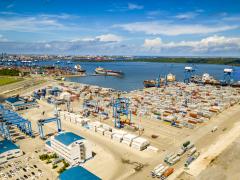
South Africa’s busiest road freight corridor between Durban and Gauteng is about to get a capacity boost with the expansion of an intermodal freight village in Estcourt along the N3.
EIT Group CEO Wessel Jacobs says the company’s expanded Estcourt Intermodal Freight Village will set a precedent for containing logistics costs and making local manufacturers more competitive.
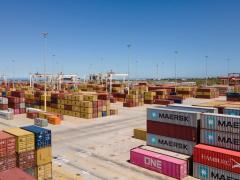
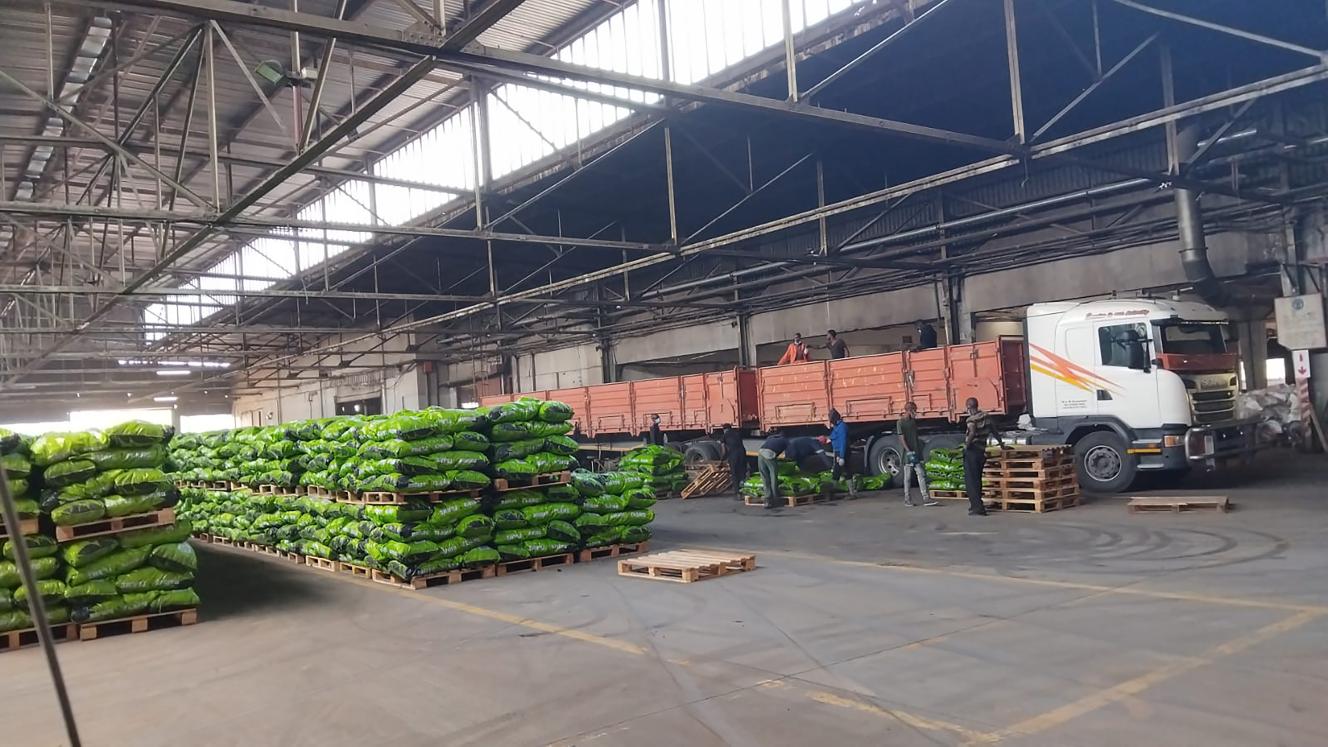
The village, which is modelled on similar facilities in Eastern Europe, comprises a multi-mode logistics centre that provides transport, logistics and value-add supply-chain services for both national and international cargo consignments. It currently caters for containerised cargo, with the ability to include bulk commodities on the horizon.
The development is expected to create jobs and grow the small town of Estcourt, and cut transport costs to the Port of Durban by as much as 50%, says EIT Group Chief Financial Officer, Manka Sebastian.
“When you look at Europe, transport costs make up 10% of imports and 8% of exports. In Asia, logistics accounts for 19% of imports and 16% of exports. In Africa, 45% of our import costs come from transport and 35% of our export costs do too.
“If we now play our part and make logistics between 30% and 50% more cost efficient, we could nullify the punitive tariffs imposed by the Trump administration,” Sebastian says.
The village, which is on the site of the former Masonite board manufacturing facility, sits along the N3 and rail corridor junction, 567km by rail from the Transnet City Deep container terminal and Sentrarand switching yards in Gauteng and 176km from the Container Terminal and Bayhead main rail terminal at the Durban Port.
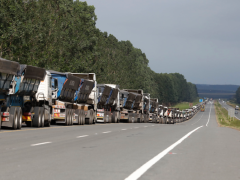
According to EIT, approximately 7 000 trucks operate along the N3 daily, moving about 27.5 million tonnes of road freight annually. Road transport accounts for over 85% of all freight moved, with rail accounting for less than 14%.
Goods trucked from Gauteng to Estcourt can be transferred to rail to complete the journey to the port, while imports can be switched to rail to be transported to the hinterland.
Avoiding this small stretch of the freight journey, which is characterised by steep inclines and high fuel costs, accidents, delays and days-long congestion at the port and ultimately accounts for 50% of the costs is a game changer that will take trucks off the roads, Jacobs says. “The former Masonite site was perfect as it had an existing rail link that has been completely refurbished. The first phase of the development is now complete, and the freight village has been fully operational since March 2024.”
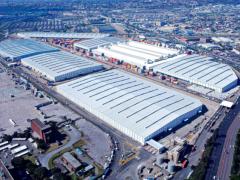
In addition, warehousing and other essential infrastructure in Estcourt is cheaper than in city centres. “We are now moving on to further expansion plans. We are going to enlarge terminal one, which is 60 000 sqm. We’ve also taken an option to expand to the other side of the rail line,” says Jacobs.
“This will provide a 500-hectare site on which we will build a second terminal. We want to use terminal one for clean cargo and terminal two for minerals and other dirty cargo.”
EIT’s first test train ran in November 2023. Negotiations with Transnet Freight Rail delivered three slots to run trains on the main line to Durban each week with well-advanced plans to increase this to three trains daily in the near future. “To date, we are yet to miss a single vessel at the port,” says Jacobs.