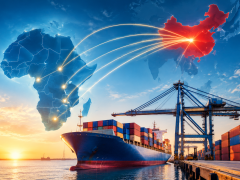
More roads (and logistics chains) will be connecting Kenya to the rest of the continent and the world as the country’s middle class grows. “Kenya is at the beginning of a major transformation that will shape its development prospects for decades to come,” says Johannes Zutt, World Bank country director for Kenya. “Every year Kenya’s population grows by about one million people, who are healthier, better educated and moving to cities. With improved urban infrastructure and connectivity, particularly through the port of Mombasa, Kenya’s new entrepreneurs will increasingly find new paths to prosperity.” Zutt was speaking at the launch of the World Bank’s 2011 Kenya Economic Update. In the short term, the Kenyan economy will need to navigate through another economic storm and manage rising inflation caused by higher food and fuel prices, says the report. For 2011, the growth rate is expected to decline to 4.8%, half a percent lower than predicted earlier. While this is less than the 5.6% achieved in 2010, it is still higher than the average of the last decade. “Kenya can achieve higher growth of at least 6% per annum in the medium term,” says Wolfgang Fengler, the Bank’s lead economist for Kenya. The report, the fourth in a series, indicates that, by 2033, half of Kenya’s population, or 33 million people, will be living in the cities. It stresses the need for Kenya to expand and modernise the port of Mombasa as well as to strengthen the competitiveness of its coastal cities, which are Kenya’s gateway to the thriving markets on the Indian Ocean. It should also improve the infrastructure within and between Mombasa and Nairobi – Kenya’s gateway to East Africa and beyond.
Kenya set for growth
Comments | 0
© Now Media. This content is protected by copyright and may not be adapted or republished. If you would like to discuss cooperation opportunities, please contact: editor@freightnews.co.za.