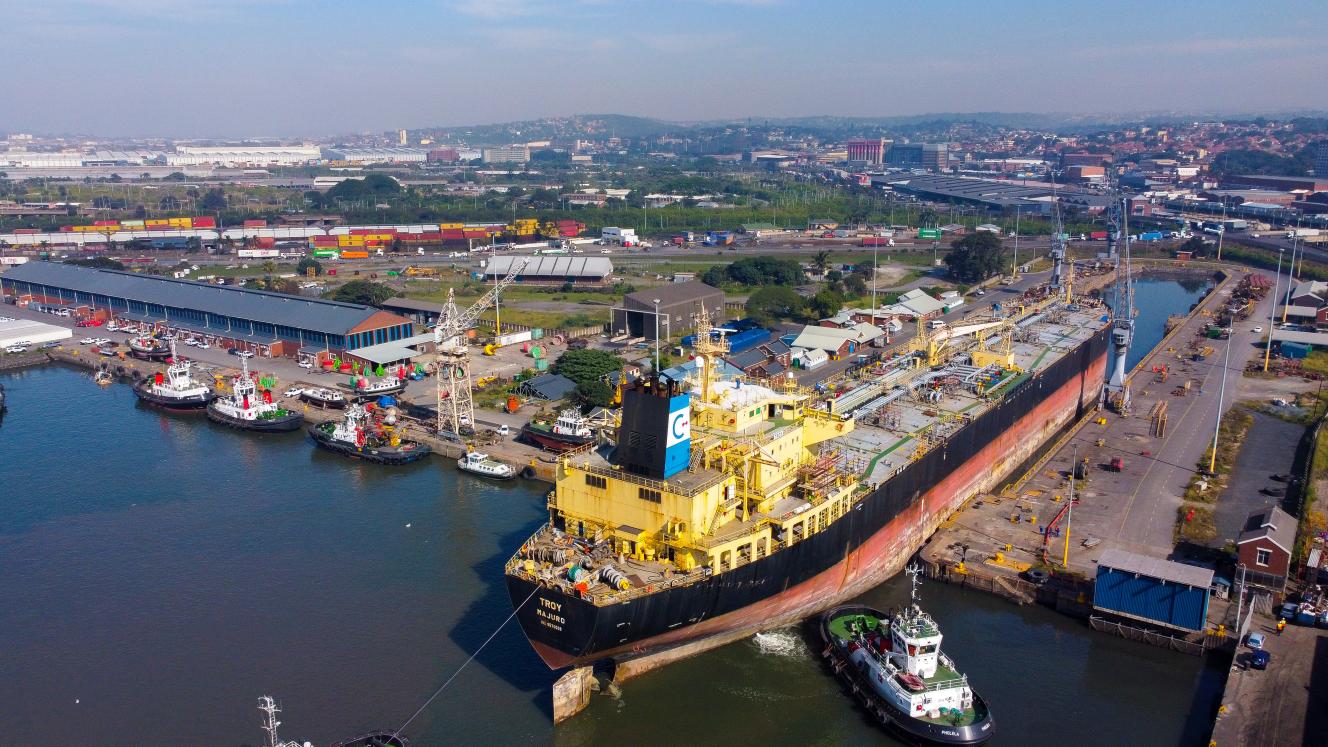
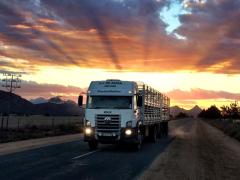
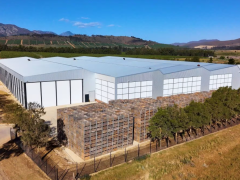
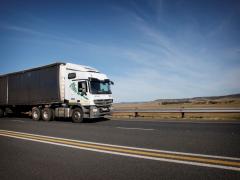
A combination of the global recession and weaknesses in the Zimbabwean economy has seen a significant shift in freight patterns, according to Ben Mukandi of Freight World. Having established the company in 1991, Mukandi has piloted it through some very stormy waters, including run-away inflation and the overnight dollarisation of the Zimbabwean currency. That was followed by massive restocking by the retail, commercial and industrial sectors which meant bringing in container loads of goods at a time. However, the subsequent global recession and uncertainty in the Zimbabwean economy itself has seen shippers switching back to Just In Time (JIT) ordering from suppliers in South Africa. “We were seeing a lot of cargo out of Europe. We even had a consolidation hub in Hamburg. Consolidation is now being done in South Africa. “However companies just do not have the funds to import large volumes at a time. They have switched to buying direct in South Africa instead of working through agents to save costs,” he says. Before the economic meltdown and isolation of Zimbabwe politically, we were seeing a lot of cargo out of Europe. However the trend has shifted and the bulk of Zimbabwe imports are now sourced from across the border in South Africa – and coupled with government’s look east policy, a lot of cargo is now coming from China and India. Changing patterns create new opportunities – and challenges for the logistics sector. Freight World has continued to adapt in order to deliver on its slogan “we deliver the goods” by offering a full service from “anywhere to anywhere”. The company was one of the first freight operators in Zimbabwe to obtain ISO 9001 Quality management certification. The organisation has a carefully selected network of agents worldwide and in the region has a branch network from Durban up to all exit points in Zimbabwe – namely Nyamapanda, Chirundu and Forbes. Groupage cargo arriving from the Far East and Europe is moved to Johannesburg which has become a hub for consolidation of cargo to Zimbabwe and for goods in transit to Malawi, Zambia and the Democratic Republic of Congo. All the offices, including border posts, are internet-networked and are connected to Zimra through fibre network. “Our strength lies in our expertise built over more than 150 years of combined experience. In addition our clients deal directly with people who own the company since the company is wholly owned by management and staff.”
Jo’burg becomes consolidation hub
Comments | 0
© Now Media. This content is protected by copyright and may not be adapted or republished. If you would like to discuss cooperation opportunities, please contact: editor@freightnews.co.za.