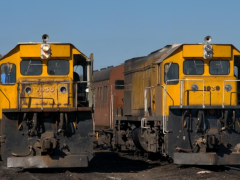
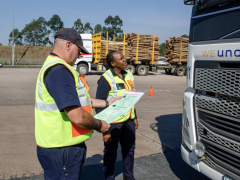
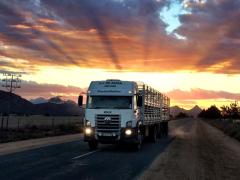
Continuing problems with internal infrastructure at the country’s railways and ports are limiting the ability of most bulk producers/exporters to meet export targets, according to Simon Lester, the managing director of global shipping firm Clarksons in Johannesburg. Furthermore, Lester says the infrastructure-related problems have prevented exporters from taking advantage of current high prices on practically all commodities. Lester, who has been involved in the shipping industry for 30 years, says the infrastructure problems are however not exclusive to South Africa. Most ore/coal producers worldwide have had problems increasing their exports, either due to throughput capacity or other factors such as weather. “Certainly it would seem both Indian and Chinese demand is such that it will be some time before there is any dramatic change in requirements or commodity prices.” However, Lester says, while seaborne bulk volumes are at an all-time high, the bulk freight market, due to record ordering of newbuildings during 2005/2008, remains under pressure – particularly in the larger “Cape” sector. With limited expansion of existing export capabilities worldwide, he says it seems unlikely that there will be any great improvement in freight rates until there is a concerted scrapping programme for older tonnage and/or significant improvements in export capabilities. But refurbishments could also cause delays and disruptions, severely impacting the work of exporters. Lester says Transnet’s recent announcement of the three-week closure of the Richards Bay coal-line from Mpumalanga will see a reduction in coal exports from Richards Bay of 4-4.5 million tonnes. Notwithstanding the infrastructurerelated impediments to doing business, Lester says the woes of shipowners in South Africa are also compounded by the high price of bunker fuel which, in many instances, is making it problematic to trade their tonnage at all.
Infrastructure constraints limit bulk export potential
Comments | 0
© Now Media. This content is protected by copyright and may not be adapted or republished. If you would like to discuss cooperation opportunities, please contact: editor@freightnews.co.za.