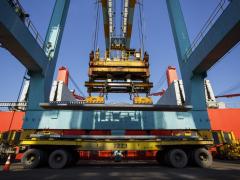
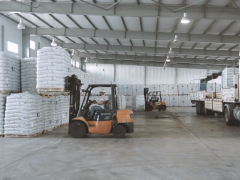
Southern Africa's ports are investing heavily in infrastructure and expertise to attract more traffic as demanding shippers seek out the option which best suits their logistics needs. Leonard Neill takes a closer look. Shippers are already switching from Durban MAPUTO HARBOUR has seen rapidly increasing throughput of cargoes during the past year, with exports now catching up with imports. This scenario will change considerably, say most of the port users, once the rail concession agreement between Mozambique's rail authority CFM and South Africa's Spoornet is signed during the course of the next few weeks. The documents governing the concession have been completed in English and are now being translated, with legal direction, into Portuguese prior to the final signature. This will give Spoornet the go-ahead to embark on the reconstruction of the rail line between Komatipoort and Maputo, speeding the movement of cargo from the Gauteng and Mpumalanga regions to the harbour for export purposes, and opening up an entirely new era in east coast harbour operations. Development at various terminals in the harbour has increased tonnages passing through in the past 12 months. Fruit from Mpumalanga is now being moved at a far more rapid rate, being brought in mainly by road transport, and the fruit terminal recently loaded a full vessel bound for Europe for the first time. Previously fruit was carried along with other consignments. A year ago TSB, Mpumalanga's largest sugar mill, decided to switch its bagged sugar exports from Durban to Maputo, and moved some 30 000 tons in a season. The producers have expressed satisfaction that Maputo's loading capacities and standards have now reached approved levels after refurbishments at the terminals. The transportation costs to Maputo, which is far nearer than Durban, have brought considerable savings. Bulk transportation of molasses and brown sugar from the same mill is now moving through the port, while timber exporters have been consulting with the port authorities to move their exports through the harbour. Once the concession is signed, the Maputo Port Development Company (MPDC) will take over the running of the harbour, and become 'landlords' of the various terminals. In some sectors ageing equipment needs to be replaced or refurbished, and general upgrading is on the cards. New access roads will be built leading into the harbour, and the rail facilities at all terminals will be improved. MACS, with its multi-purpose vessels, is the only dedicated container-carrying line of any size which has Maputo on its regular international schedule, though numerous other vessels are calling there these days at various times. Other lines are, however, now negotiating with harbour officials with a view to making scheduled calls there once the new authority takes over. Ignazio Messina has Maputo on its northbound schedule from South Africa to the Mediterranean, calling once a month. The line deploys ro-ro vessels on the service offering both containerised and breakbulk capacity, while Unicorn has restructured its Mozambique schedule with a weekly Durban-Maputo-Nacala-Beira-Durban service. The bulk of coal from the Mpumalanga region is shipped through Richards Bay, but coal producers in the province have stated that once better rail facilities are provided, they will export excess production through Maputo, which is also being targeted as a future outlet for the increasing manganese and chrome production in the province. Gauteng manufacturers are also eyeing developments in Maputo harbour now that the Maputo corridor is in full operation, giving the port a future lifeline of activity to market when the development, now in the planning stages, becomes an established source of quick and efficient transportation.
Imminent rail concession will pump new life into Maputo
Comments | 0
© Now Media. This content is protected by copyright and may not be adapted or republished. If you would like to discuss cooperation opportunities, please contact: editor@freightnews.co.za.