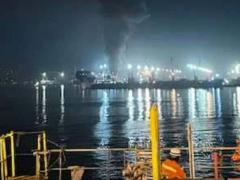
Should TotalEnergies go ahead with plans to develop its Venus-1 project, it will have taken 56 years from the discovery of the Kudu gas field – situated about 170km south-west of Lüderitz Bay – to achieve the first sale of oil, projected for 2029. In 2022, Venus-1 was identified as the biggest sub- Saharan oil discovery in Africa, with estimates ranging from 1.5 to two billion barrels of oil. It marked TotalEnergies’ most substantial find in about two decades. The project is operated by TotalEnergies in partnership with QatarEnergy, Impact Oil & Gas and Namcor. The first phase aims to extract roughly 920 million barrels, with the potential to push production to 250 000 barrels a day. In April, the Namibian government announced it had begun reviewing a field development plan for the Venus project, which is the next step in the regulatory process. TotalEnergies is expected to decide on when or whether to go ahead with the project by the end of 2026. There are technical challenges. The field in Block 2913B is 290km to 320km off the coast of southern Namibia, and lies at depths of about 3 000 metres. Patrick Pouyanné, chairman and CEO of TotalEnergies, has spoken publicly of high gas-to-oil ratios and extreme water depths, which have made it a challenge to keep development costs below the N$20 per barrel mark. For Namibia, the stakes are high. The Environmental and Social Impact Assessment (ESIA) for the deposit indicates that the Venus project could generate R127 billion to R229 billion in government revenue over a 25-year period. It is expected to boost Namibia’s GDP by 13% to 18% annually during peak production years. It is one of a number of projects. In December 2025, TotalEnergies concluded an agreement with Galp to enter as operator in the prolific PEL 83 licence, including the Mopane discovery, adjacent to Venus. “The transaction positions TotalEnergies as the operator of the two largest oil discoveries in Namibia and opens the way for the development of a major producing hub, generating long- term value for the country and the partners,” the company said in a statement. The agreement will reduce costs and risks by sharing resources. TotalEnergies plans to use floating production, storage and offloading (FPSO) vessels to store and transport the oil pumped out of the wells. “By enabling the creation of a producing hub in Namibia, we aim to achieve synergies that will create long-term value for both Namibia and the stakeholders,” said Pouyanné. Another major discovery is Shell’s Graff-1X, discovered in February 2022. After a $400 million write-down in January 2025 and declaring the find not commercially viable, Shell plans to return to the region. “Shell, along with its partners, is progressing with plans to conduct further exploration drilling activity in PEL 39 during 2026 to continue its evaluation of the prospectivity,” said a Shell spokesperson in a statement. “This activity reflects Shell’s continued commitment to responsibly explore Namibia’s offshore potential in close partnership with QatarEnergy and Namcor.” According to S&P Global Energy forecasts, Shell’s PEL 39 development could come online in 2033, after TotalEnergies’ Venus project and Rhino Resources’ and Azule Energy’s PEL 85 project. In April 2026, bp announced it had agreed to acquire a 60% interest in three offshore exploration blocks in Namibia from Eco (Atlantic) Oil & Gas. Gordon Birrell, bp’s executive vice president: production & operations, said: “Namibia is a region attracting growing industry interest and it has a number of exciting frontier basins. This agreement marks bp’s entry into the country as an operator, strengthens bp’s exploration portfolio and provides long- term growth potential. “We look forward to supporting the country in developing its resources.” ER
Hurry up and wait for potential oil and gas bonanza
Comments | 0
© Now Media. This content is protected by copyright and may not be adapted or republished. If you would like to discuss cooperation opportunities, please contact: editor@freightnews.co.za.