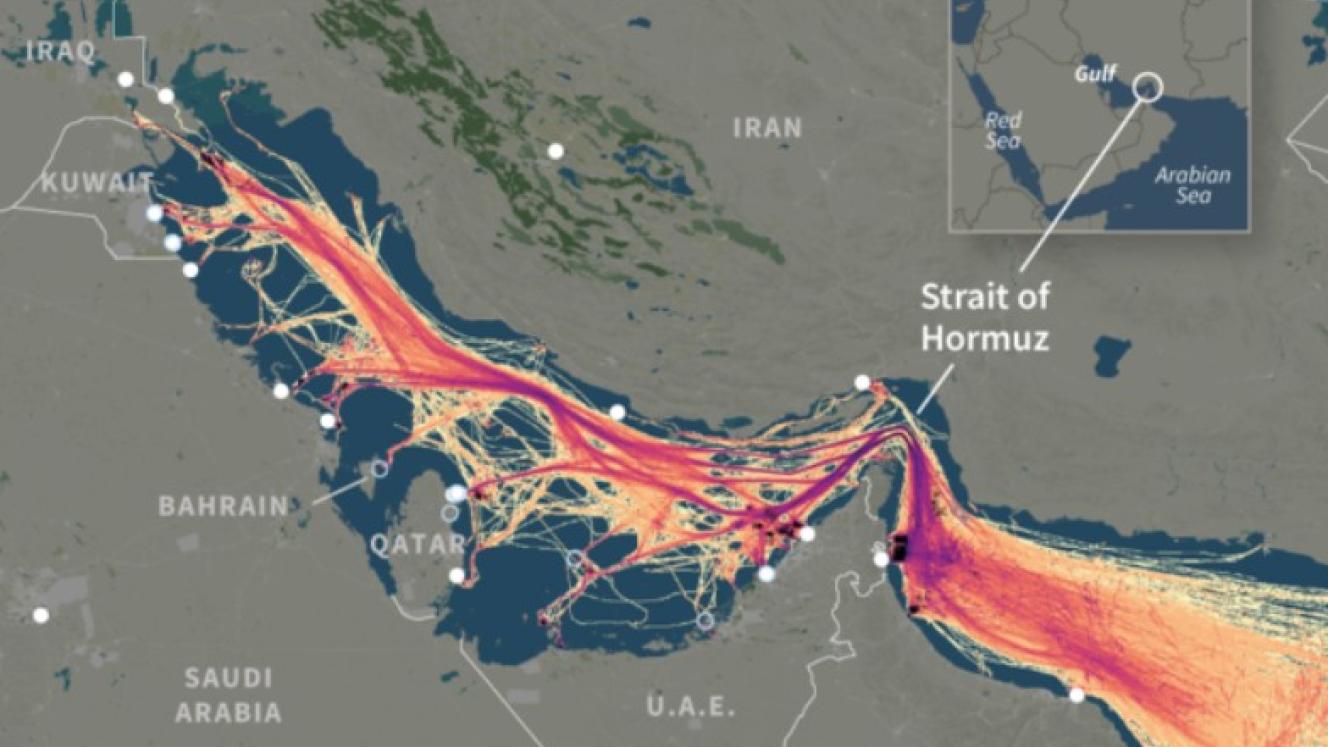
Iran is proving the supply chain grip it has on the Strait of Hormuz after recent data confirmed that 97% of all transits through the severely constricted waterway were made by vessels linked to the Islamic Republic.
According to Lloyd’s List, this was for the period March 16-22 as most foreign-flagged vessels preferred to idle in the Persian Gulf, fearing retaliation from the Islamic Revolutionary Guard Corps (IRGC).
Lloyd’s said this was completely contrary to previous assessments.
“Analysts have long argued that a full Iranian shutdown of the Strait was improbable, largely because it would choke off Tehran’s own vital trade routes.
“Yet intelligence data shows that Tehran has pulled off the improbable.”
Also, while sporadic attacks on vessels are deterring international shipping from transiting the chokepoint, Iran has upped the ante by allowing vessels aligned with countries that have friendly diplomatic relations with Tehran to sail through the strait.
However, sea intelligence consultancy Windward, has reported that this is dependent on pre-clearing transits with Tehran and staying close to the Iranian coastline by sailing around Larak Island.
Windward speculated that, apart from open-water attacks by the IRGC, avoiding the wider channel of Hormuz could be because of undersea mines and subterranean drone attacks.
Lloyd’s reports: “Last week was the busiest through the strait since the US and Israel first attacked Iran (on February 28), with an estimated 48 cargo-carrying vessels above 48 000 dwt making the voyage.
“More than 20% of those transits were by vessels with seemingly few links to Iran. Yet all transited via the lengthy and illogical Larak Island detour, which becomes much more logical when you know the IRGC uses it as a checkpoint to clear (or deny) vessels from transiting the strait.”
Iran’s own import interests are also ongoing, Lloyds says, as bulkers have been recorded berthing at ports like Bandar Abbas.
“That’s not to say it’s plain sailing. Many of those bulkers had long waits outside the strait before getting the green light; some shadow fleet tankers reassessed their Iran calls and sought employment elsewhere,” Lloyd’s reports.
“Whether Iran can sell enough oil to prop up its beleaguered economy remains an open question. Nor should we expect a mad dash to join the queue at Checkpoint Larak any time soon.”
However, Iran’s current strategy underpins its initial pronouncement about the strait – that it remains “open for business, but closed to its enemies”, Lloyd’s reports.
The strategy mimics what the Houthi rebels, an Iranian proxy in Yemen, did in the southern Red Sea when it started attacking vessels linked to the US and Israel sailing through the Suez Canal.
Since November 2023 it effectively disrupted maritime traffic through the Egyptian waterway, causing east-west voyages to reroute around the Cape of Good Hope, forcing liner fleets to build in expanded capacity and resulting recalibration complexities and rate volatility.
“The question now is whether it can replicate that in Hormuz, and for how long,” Lloyd’s reports.