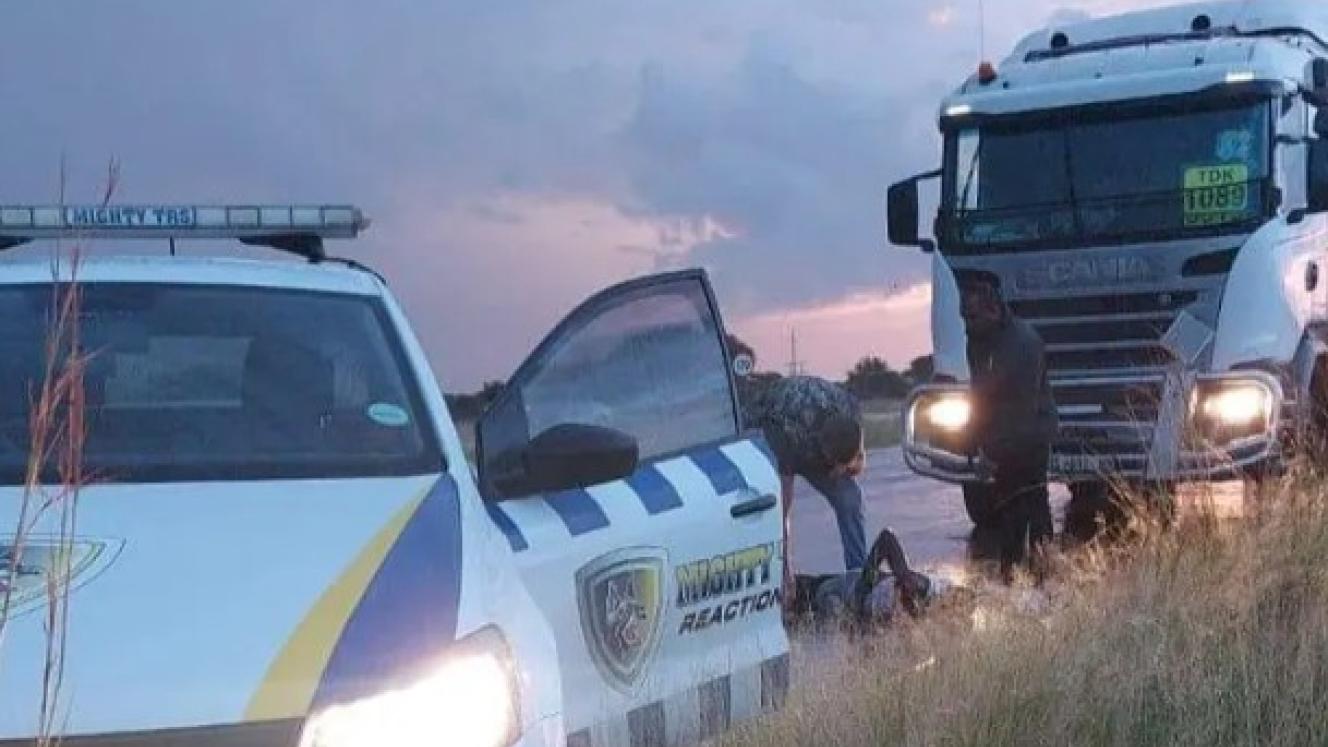
The Road Freight Association (RFA) has reacted cautiously to the South African Police Service (SAPS) third-quarter crime statistics, which show a decline in truck hijackings despite hundreds of incidents still occurring across the country.
According to the latest SAPS crime data released on Friday, truck hijackings fell by 64 cases, or 15,5%, from 413 in October to December 2024, to 349 in the same period of 2025.
This contributes to the broader “trio crimes” (carjacking, residential and non-residential robbery) decreasing by13,8%.
Gauteng remained the dominant hotspot, recording 223 truck hijackings in the 2025 quarter, representing about 64% of the national total. Other provinces recorded the following in October to December 2025: KwaZulu-Natal 32, Western Cape 13, Eastern Cape 19, Mpumalanga 25, Limpopo 9, North West 21, Free State 7, and Northern Cape 0.
Nationally, the decline aligns with reductions in related aggravated robbery subcategories, including carjacking (down 8,1%, from 4 807 to 4 420) and robbery at non-residential premises (down 22,5%).
However, RFA chief executive Gavin Kelly expressed scepticism about the figures' reliability, pointing to longstanding industry concerns over under-reporting and lack of trust in the police.
“The association has, over the past two decades of interaction with the SAPS, noted that a dedicated task team relating to road freight vehicle hijacking needed to be reconstituted, or at the very least, far swifter action needed to be taken when such incidents were reported (both in terms of actual intervention during such incidents and in terms of crime investigation following the incident),” Kelly said.
He highlighted progress in some areas but emphasised persistent issues.
“There have been some interventions and progress has been made – unfortunately the broader road freight industry has long lost both confidence in the SAPS being able to perform the various tasks, and in the assuredness that there are not elements of the SAPS itself that are involved in crime through various ‘mafia’ operations. This is the reality – whether the country or the SAPS like it, or not.”
Kelly said statistics depend on full reporting.
“Statistics rely on reporting – full reporting of each and every incident – to make a true deduction on what trends are. Full reporting happens when faith in the criminal justice system prevails. It does not,” he said.
He explained that many operators no longer report hijackings.
“There are many operators (transporters) who no longer report incidents (hijackings) – they have given up on any real action by the SAPS, the apprehension and removal of those who perpetrate the crime, and the closure of criminal rings involved.”
Kelly said there are improvements against “blue light gangs” in Gauteng and KwaZulu-Natal, particularly along the N3, but warned hijackings have grown more sophisticated with cargo and products being “specifically targeted for customers”.
He said the sector faces practical barriers to reporting, including losses from evidence storage.
“In most cases, hijackings are reported to the SAPS”, but “for insurance purposes (many insurers require a case (CAS) number for any claim to proceed). A number of operators self-insure and thus have no need for a CAS number for insurance purposes and wish to get the vehicle repaired (if necessary) and back on the road earning revenue,” Kelly said.
He said the impact on the industry remains severe, with rising security costs passed on to consumers.
“Over the past 30 years, including a marked increase in the last 10 years, the cost of security for vehicle and loads has increased substantially. The association publishes a monthly Vehicle Cost Index which shows the (average) cost of security rising from 0,3% ten years ago to roughly 2,3% by the end of 2025,” he said.
Some specific cargo operations, such as cash, electronic goods, fuel, spirits and medicines have had a sharper increase to 4,1% of total costs.
Kelly said the association facilitates discussions with the police regarding crime and presents and runs workshops and information sharing opportunities between road freight operators and security businesses.
“There definitely needs to be a ‘closing of the loop’ between the first levels of crime prevention and the legal consequences of being found guilty of perpetrating these sort of crimes. Some process needs to happen where the public confidence or the faith in the SAPS and the criminal system – here specifically within the road freight industry – is restored,’ Kelly said.