A growing appetite for
improved and expanded
infrastructure in Africa
has raised optimism in
the region’s project sector.
According to Deanne de Vries,
senior vice president for Agility
Africa, while oil and gas projects
have for a long time been limited
to Angola and Nigeria, there are
now large-scale developments
all over the continent including
Mozambique, Cote d’Ivoire,
Senegal and Tanzania as well as
Ghana, Kenya and Uganda.
“You are also seeing new routes
to market. For example Uganda
and Tanzania recently signed a deal
for a heated crude export pipeline.
Four West African countries (Cote
d’Ivoire, Liberia, Sierra Leone and
Guinea) are building a cross-border
electricity interconnector for
energy supply,” she said.
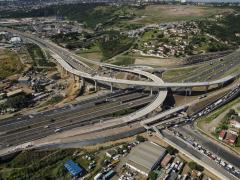
All of this means increased
project cargo volumes.
The sector, however, is not
without its share of challenges.
“The vital role of education cannot
be over-emphasised,” said De Vries.
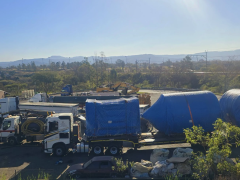
“Project cargo and breakbulk
require expertise. One needs
people to keep track of spending,
transport engineers to correctly
estimate bridge weight restrictions,
health, safety and environment
(HSE) staff to ensure people are
working safely and not harming the
environment, and project managers
to deliver cargo on time and to the
right location.”
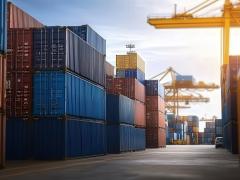
Also challenging, she said, was
port and city congestion – along
with bureaucracy.
“This adds significantly to
shipping costs to Africa,” she told
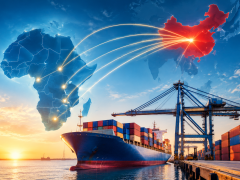
FTW. “The World Bank estimates
that the cost of taking a container
from China to Tanzania is 60%
higher than from China to Brazil,
even though Brazil is on the ‘wrong’
side of South America from the
point of view of
China.”
She said while
ports were
improving and
turnaround times
of project cargo
in particular
was speeding
up, it was still
extremely difficult
to accurately
predict how long
it took for items
to clear customs and the port.
This uncertainty heavily impacted
projects and deadlines.
Inefficiencies, bottlenecks and
corruption remain at the heart of
most of the delays.
But she remains extremely
optimistic about the project and
breakbulk sector. “Infrastructure
is a key enabler to Africa’s growth.
And this requires the expertise of
companies able to deliver project
and breakbulk cargo on time,
on budget, to the right location,
undamaged.
While fixing
existing or
building new
infrastructure
is beyond the
scope of any
one company
or even a single
government,
working together
governments,
companies,
funding
institutions and others can develop
the necessary infrastructure
that will catalyse trade, growth,
investment and development of
existing and new industries,” she
said.
The World Bank estimates
that the cost of taking a
container from China to
Tanzania is 60% higher
than from China to Brazil.
– Deanne de Vries