For government’s Green Transport Strategy (GTS) to meet its objective of lowering CO2 emissions, it needs to provide affordable and sustainable alternatives, according to the Road Freight Association’s acting CEO, Gavin Kelly.
The strategy was launched by Minister of Transport, Blade Nzimande, late last month. Kelly told FTW that the RFA “fully supported” the need for cleaner fuel emissions but posed the question – what are the alternatives? Kelly said a number of transporters were already using more modern fleets that were designed to burn cleaner fuels but said that not all transporters could afford to upgrade.
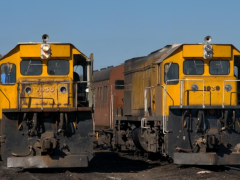
“Rail is potentially far more environmentally friendly – and might be cheaper per freight tonne kilometre – but the modal shift has yet to take place for numerous reasons, including questions around security and operational efficiency.”
He said there were also no branch networks serving the smaller, provincial roads. And, he queried, where was the money for the extensive rail developments going to come from? The other alternative, said Kelly, could be electric vehicles but that raised questions around the supply of power and the affordability of that supply.
“Power parastatal Eskom has been focused on a number of alternative sources of power, even nuclear, but affordability is an issue and again, the money to acquire new alternatives is also a factor,” he pointed out. “We have to be careful, as a country, to ensure we don’t simply swop one major cause of C02 emissions for another,” said Kelly, adding that government would need to provide charging stations along all the major transport routes.
“Who is going to fund that?” A third factor that needs to be considered around freight transport is South Africa’s neighbouring countries.
“I doubt they have the funds to provide alternate transport options and what are we going to do, ban their trucks from coming to South Africa unless they comply? That would cause riots,” said Kelly.
Ensuring compliance was also a challenge. Road traffic legislation consultant, Alta Swanepoel, agreed that there were a number of regulations that were sure to follow as a means to enforce the policies contained in the GTS.
“Of course, there are already a number of environmental and other regulations governing GHG emissions but I am sure there will be greater focus on implementation of these and additional regulations that may arise,” she told FTW.

Rail is potentially far more environmentally friendly but the modal shift has yet to take place. – Gavin Kelly