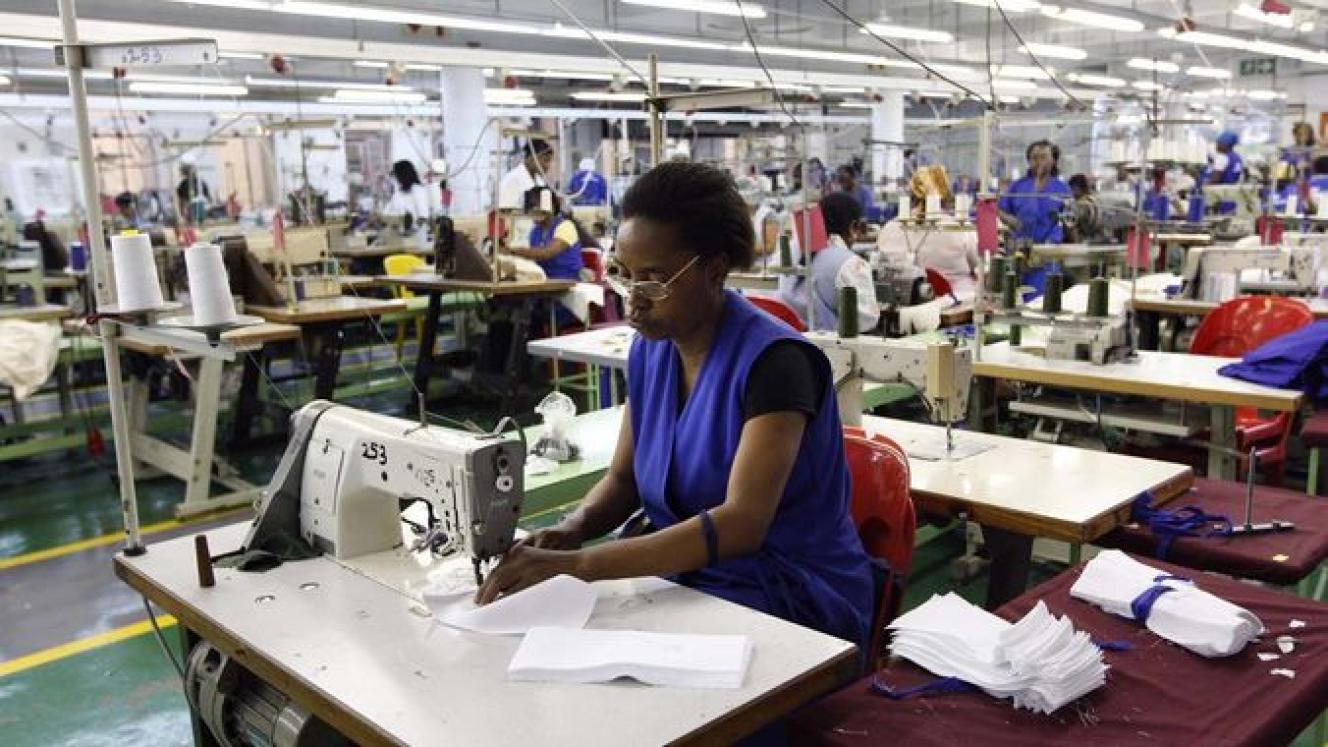
The government’s injection of almost R10 billion into the clothing, textile, leather and footwear sector has gone a long way to boost the global competitiveness of local manufacturers according to analysts and business leaders.
Analysts and manufacturers have commended the Department of Trade and Industry (dti) for its efforts, including the establishment of the IDC-managed Clothing and Textiles Competitiveness Programme (CTCP) aimed at clustering businesses to make collective improvements.
This includes a Production Incentive Programme (PIP) which provides direct subsidies of 7.5% of value added in production to improve competitiveness of equipment and processes.
IDC Chemicals and Textiles divisional executive, Shakeel Meer, said the government had played a major role in supporting the sector through the programmes.
“Over the last five years over R4 billion has been approved from dti funding. In addition, IDC funds the sector from its own resources, including start-ups, expansion of existing businesses and turnarounds. We also provide subsidised funding for manufacturers to improve their competitiveness. IDC has approved over R3.5bn in funding from its own resources into the sector in the last six years,” Meer said.
Funding via debt guarantees and equity products was used for plant equipment and working capital investments, he added.
“The demand for IDC funding has remained fairly consistent with about R545 million approved in the last year. However, what is masked within this is a growing demand for finance to improve competitiveness and expand businesses rather than sustaining businesses,” Meer said, adding that SA companies achieved competitiveness through focusing on higher value items, fast fashion, design and competitive equipment and processes.
Sheraton Textiles CEO Nick Steen said the industry would have been “beyond repair” without the CTCP and production incentive.
“Industries were all on the bone and had not invested - machinery was old and inefficient and we didn't have a hope of competing. It has been a huge benefit to the industry,” he said.
Benchmarking and Manufacturing Analysts chairman Justin Barnes said CTCP had helped recovery but the government’s local procurement pact aimed at growing local production could not be enforced because the World Trade Organisation (WTO) did not permit local procurement rules.
KZN Clothing and Textile Cluster executive Shaun Gannon said there was scope for the country’s manufacturers to grow exports into Africa and Europe.
“We did an export study focusing on the EU and found we could meet the price point and lead times that the market would be looking at. The dti has given us a budget to do our first outbound trade mission to go to sourcing departments in the EU next year. In Africa the opportunity is overrated but it is there,” he said.
Gannon added that manufacturers wanting to supply globally would have to invest in major plant revamps to comply with countries’ stringent regulations, which some were doing with dti support.