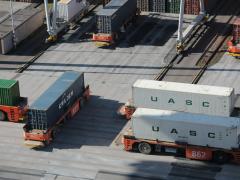
Ghana is the leading light in what remains of the Economic Community of West African States (Ecowas), thanks to a thriving gold mining industry, which is now the biggest in Africa and sixth-largest in the world. South Africa is now ranked third, after Mali. Orson Gard, senior country risk analyst at BMI, told a webinar attended by Freight News that the Ghanaian economy was growing by 6.3% in 2025, “with momentum being driven by household consumption and fixed investment, both of which are benefiting from a sharp drop in inflation”. Inflation fell from 24% at the start of 2025 to 9% by September. BMI predicts the “annual GDP growth will nudge up from 4.9% this year to 5% in 2026, as easing price pressures help to lift household purchasing power and allow for stronger private consumption”, along with interest rate cuts. According to BMI, Ghana should benefit from AfCFTA due to its expanding export base and enhancements in trade infrastructure. Increases in the production of processed foods and basic manufacturing could support growth in regional exports as trade barriers decrease, while upgrades to Tema and Takoradi ports and customs modernisation are expected to lower costs and shorten lead times. The withdrawal of the Alliance of Sahel States (AES) comprising Mali, Burkina Faso and Niger from Ecowas has seen Ghana competing with neighbouring Togo for logistics business through their ports from the landlocked states. Both are facing competition from Mauritania (which withdrew from Ecowas in 2020) and Morocco, which “are enhancing Sahel-Saharan integration and facilitating AES access to the Atlantic Ocean”, according to security analyst Colonel Festus B Aboagye. Trade in the region is now more expensive and slower after tariffs and stricter border controls were reinstated between AES countries and Ecowas members, in a region which was benefiting from tariff-free trade and free movement. Another complication is the stalling of infrastructure projects which were being jointly financed by Ecowas members, according to Djiby Sow, senior researcher at the Institute for Security Studies. “Unresolved are the withdrawing states’ statutory financial contributions to Ecowas and the costs of projects that the bloc continued implementing in their territories between their January 2024 withdrawal announcement and exit in January 2025,” he says. Ecowas regulations stipulate that they should have maintained their financial commitments during this time. “The split also complicates the financing and repayment of numerous cross-border infrastructure projects spanning the Ecowas and AES zones. “These include regional corridors funded by donor consortia, including the Ecowas Bank for Investment and Development. This could lead to complex and lengthy negotiations.” The remaining Ecowas members have taken a more pragmatic approach to their earlier condemnation of the coups in the AES countries. Sow says the leaders of Ghana, Senegal, Nigeria and Guinea- Bissau are among those which have started talking to the leaders in the military juntas. ER
Ghana glows golden in Ecowas
Comments | 0
© Now Media. This content is protected by copyright and may not be adapted or republished. If you would like to discuss cooperation opportunities, please contact: editor@freightnews.co.za.