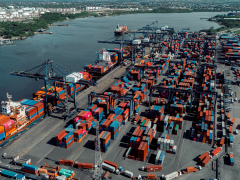
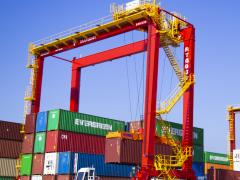
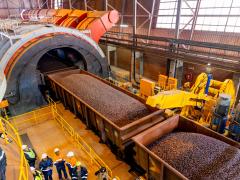
Members of the Gulf Cooperation Council (GCC) have become major investors in African logistics infrastructure, according to Mariette Kas- Hanna, MENA senior country risk analyst at BMI. The GCC countries are Bahrain, Kuwait, Oman, Qatar, Saudi Arabia and the United Arab Emirates. Speaking during a recent online event, she said that there had been rapid growth in trade between the GCC countries and sub-Saharan African (SSA) markets over the past two decades. “GCC countries view SSA as an integral part of their long-term diversification and economic visions. The GCC represents around 8% of SSA’s total trade, and this is an increase from less than 3% back in 2005,” she said. “Similarly, GCC countries are increasingly becoming one of the leading investors into the region, representing about 6% of SSA’s total inward FDI stock in 2023. This is an increase from less than 1% back in 2009. And we think that this share has further increased.” She said the United Arab Emirates (UAE) was the clear front-runner, leveraging investment in logistics and ports, as well as economic partnership agreements and other bilateral investments and trade treaties. “Other countries in the GCC, such as Saudi Arabia and Qatar, are catching up, committing billions of dollars’ worth of investment. However, it is worth noting that any sharp and prolonged fall in oil prices is a key risk from a funding perspective, because this would reduce oil revenues, and the liquidity available for investment in SSA would become a bit tighter,” she added. Sayen Gohil, SSA country risk analyst at BMI, says GCC investment in SSA is driven by reducing the costs of trade and “it also gives GCC markets strategic control of trade routes, and increases their maritime influence and role in global supply chains”. SSA also offers access to critical minerals, with GCC countries investing in mining as well. “The UAE is really a commodities trading hub, and its focus on logistics will fit really well with mining investments. From an African perspective, we think that logistics investments are essential for the region’s future economic development,” said Gohil. “Trade flows are only going up, especially with the GCC, and this requires significant facilitating investments.” BMI research shows that SSA countries are investing heavily in transport and energy projects. Investment in rail projects amounts to $60 billion, according to Lara Wolfe, SSA senior country risk analyst at BMI. “And this is critical because efficient rail networks are essential for moving bulk goods cost-effectively across the continent’s vast distances,” she said. Roads and bridges follow, with $30bn under construction, improving regional trade corridor connectivity. Port infrastructure developments would address capacity constraints and reduce the dwell times that have made African ports generally less competitive globally, added Wolfe. “In addition, airport developments will be critical for perishable exports and regional business connectivity. As rail networks expand and ports modernise and road corridors improve, the cost of moving goods across Africa will decline, making intra-regional trade more commercially viable,” she said. ER
GCC invests heavily in SSA logistics
Comments | 0
© Now Media. This content is protected by copyright and may not be adapted or republished. If you would like to discuss cooperation opportunities, please contact: editor@freightnews.co.za.