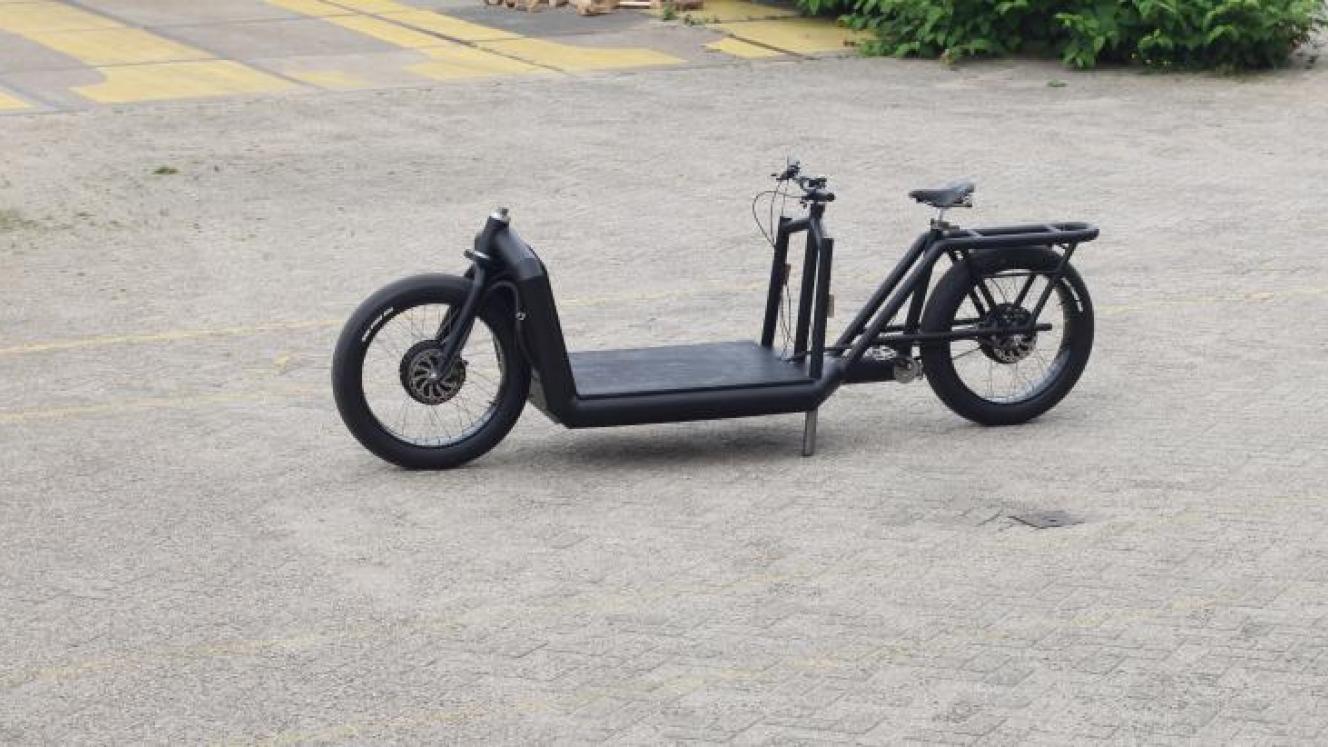
Tomorrow will see the launch by Gauteng MEC for Roads and Transport, Ismail Vadi, of a new pilot project that will see goods for last-mile delivery being moved on electronic cargo bikes.
The e-cargo bike forms part of an ongoing project between the Gauteng Department of Roads and Transport (gpdrt) and the German government under the Gauteng Logistics Indicator System.
Each motorised bike can carry up to 160 kilograms and the department has limited the speed of the bikes to 25 kilometres an hour for the trial period – which will last three months. The bikes are manufactured by German company Anywhere.Berlin.
“The pilot test will help us to determine how the bikes will behave in a local environment as the rolling terrain in Gauteng is very different to the terrain in Germany and Europe as a whole,” Gpdrt chief director, Freeman Masuku, told FTW Online. “We have identified waste collectors who usually collect plastic and cardboard in trolleys as our first test setting to see how these bikes will interact with local traffic. As these are just motorised bicycles they can be driven without a licence.”
He noted that two bikes had been brought into the country for the trial but the department was aiming at increasing this to at least eight. Masuku said that the gpdrt believed that if the trial was successful, the bikes presented a plethora of opportunities, especially with regard to goods bought by consumers online.
The project was developed in collaboration with the Innovation Hub, the Council for Scientific and Industrial Research, the German ministry and the Sharpeville Kasi Development Project and will be tested in Sharpeville before expansion is considered.
According to gpdrt spokesperson Melitah Madiba, use of the bike is anticipated to provide the province with a more cost-effective, safer and greener last mile solution to the freight distribution system while decreasing congestion in Gauteng.
The bikes are currently manufactured in Germany in micro factories built out f three containers where around three employees can build the bikes.
If the project proves successful, Gauteng government is looking at building these factories in the province so the cargo bikes can be produced locally.
“The idea is to put these micro factories in township across the province in order to bring these manufacturing skillsets into these communities,” added Masuku. “We are currently in discussions with the Innovation Hub to test the manufacturing element by building one of these factories at their site if the pilot proves successful.”