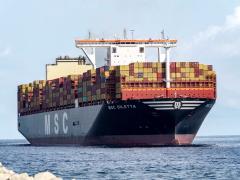
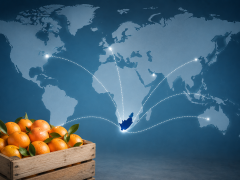
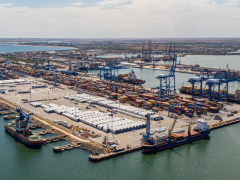
AN ENTERPRISING R15 million government initiative has been established to improve the competitiveness of the South African fruit export industry, with particular emphasis on the postharvest leg of the chain. This three-year programme is seen as a giant step forward for the industry. The funding will be channelled into the publicprivate partnership set up between the Fresh Produce Exporters’ Forum (FPEF), the Agricultural Research Council (ARC) and the Department of Science & Technology (DST). The programme will be managed by a newlyelected, seven member Programme Management Unit (PMU), chaired by FPEF CEO Stuart Symington. The responsibility of managing the programme on a day-today basis will rest with Dr Malcolm Dodd, who will be seconded from the PPECB to do the honours. Once a well-known figure in the avocado industry, Dr Dodd is highly regarded as one of the very few cold chain specialists in the industry. Symington is confident that significant additional funding can be leveraged for this programme. He has been liaising closely with the Commonwealth in London regarding a joint venture on analysing weaknesses in the chain from inland cold stores right the way through to the product passing over the rail of the vessel in port. “The whole idea behind this programme is to improve the competitiveness of our product in our overseas markets by evaluating product quality and efficiencies at the South African end of the export value chain. Most importantly, we will be adapting our practices to what the market wants, and we will be benchmarked against the world’s best,” explains Symington. Technology gaps have been identified by the industry for this programme. An example is container technology which hasn’t changed in 30 years. The airflow, temperature and humidity controls inside containers need to be thoroughly reviewed, as there appear to be great opportunities for improving the arrival quality of our fruit products if this technology is improved. It is all the more important considering that, in the last five years, the majority of the fruit export business (70%) has switched from the specialised reefer mode to the containerised shipping mode. “Capespan’s recent shift from conventional shipping to container shipping has put enormous pressure on shipping companies, logistics companies and port operators to provide the necessary containers and equipment to move their product through the chain,” says Symington.
Fruit export industry gets R15m boost
Comments | 0
© Now Media. This content is protected by copyright and may not be adapted or republished. If you would like to discuss cooperation opportunities, please contact: editor@freightnews.co.za.