There are serious behind-thescenes
moves to ensure that SA
Revenue Service’s risk engine
does not hamper trade.
Compliance risk and case
selection group executive,
William Mpye,
told delegates
at the recent
FTW/JCCI
business
seminar in
Johannesburg
that the
objective was
to intervene
as little as
possible and
in the process
introduce
non-intrusive
technologies
like the two scanners in
Durban and Cape Town as
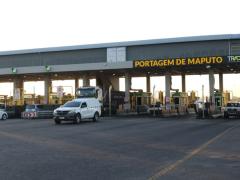
well as Beitbridge where a
unit was moved recently. This
had resulted in significant
changes in behaviour at
Beitbridge, he added.
Customs is fully aware
of complaints around
repetitive stops. “We are
not only addressing current
issues but
also aligning
ourselves with
the programme
of The National
Customs Act
(NCAP) which
is currently
under way,” he
said.
And while
he could not
share all the
details of the
authority’s risk
management
interventions, he said action
had been taken to ensure that
the risk posed by some of the
risky consignments did not
hamper trade.
“We have launched a
programme to look at risk
engine and risk methodology
as well as capability behind the
risk entity. We started this year,
so it’s early days, but we have
started with lots of conceptual
work. Recently I sat with our
design team to look at the
entire value chain in the risk
area to see how we can manage
the risk area without affecting
legitimate trade.
“What we try to achieve
is to have the right stops, to
intervene as little as possible
and to be as non-intrusive as
possible.”
INSERT & CAPTION
We have launched a
programme to look at
risk engine and risk
methodology as well
as capability behind
the risk entity.
– William Mpye
Focus falls on non-intrusive risk technologies
Comments | 0
© Now Media. This content is protected by copyright and may not be adapted or republished. If you would like to discuss cooperation opportunities, please contact: editor@freightnews.co.za.