Deep-seated
structural fault
lines remain in the
SADC, with low
levels of export activity.
This is according to
International Relations and
Cooperation Minister, Maite
Nkoana-Mashabane who
made the comment ahead of
the 37th Ordinary Summit
of SADC Heads of States
and Government in Pretoria
recently.
The event
focused on
partnership
with the
private sector
to develop
regional value
chains.
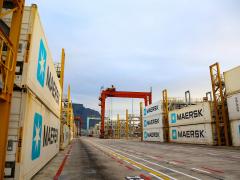
Intra-
SADC trade
currently
makes up less
than 17% of
total SADC trade. And while
the region was endowed with
abundant and diverse natural
resources, productive sectors
were not adding enough
value, she said.
“Intra-SADC trade should
be nearer 50%, which would
improve living conditions,”
added SADC deputy executive
secretary for regional
integration, Thembinkosi
Mhlongo.
He said appropriate
skills and technologies
would increase SADC’s
competitiveness and create
employment and selfsufficiency,
which would
culminate in higher quality
goods and services.
“SADC member states
need to integrate into global
value chains by moving into
higher value-adding activities,”
Mhlongo said.
He called for public-private
partnerships (PPPs) to help
drive projects forward. He said
engaging the private sector
could play a
complementary
role in
expanding
services and
infrastructure
development.
“PPPs are a
viable model
for attracting
investments for
public projects
by allowing
governments
to have more access to
additional capital. We need
a big role to be taken by the
private sector,” he added.
Agro-processing,
mineral beneficiation and
related mining operations,
pharmaceuticals and
capital goods and services
have been identified as
attractive value chains in
the region.
SADC secretariat, Phera
Ramoeli, explained that the
SADC Development Fund
would ensure priorities the
SADC set for infrastructure
would be funded with its
own resources. The fund, he
said, would reduce project
development time.
He explained the
challenge was not
necessarily a lack of
funding, but rather the
quality of projects, which
were not meeting investor
requirements. “We have
infrastructure projects
in place, particularly in
energy and transport. We
are trying to link ports
to product destinations
through a corridor
approach.”
Ramoeli said the SADC
had prioritised the Beira
and North-South Corridors
and was also developing
a masterplan for rail, to
establish which rail links
had to be prioritised.
“Industrialisation will
require a lot of energy,” he
conceded. “Member states
have – collectively and
individually – planned a
number of power generation
projects. We are hoping
to generate up to 30 000
megawatts of power by
2022.”
He said member states
were working hard to
ensure that softer issues,
such as harmonising load
regulations and developing
one-stop border posts, were
continually being looked at.
INSERT & CAPTION
Intra-SADC trade
currently makes up
less than 17% of total
SADC trade.
– Maite Nkoana-Mashabane
Fault lines remain in SADC
Comments | 0
© Now Media. This content is protected by copyright and may not be adapted or republished. If you would like to discuss cooperation opportunities, please contact: editor@freightnews.co.za.