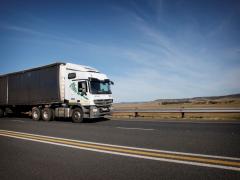
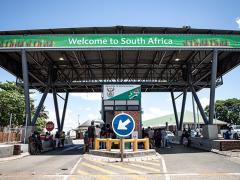
Last week saw the implementation of the electronic road freight manifest (e-RFM) – a system intended to speed up the movement of cross-border road transport. On May 18, the automated cargo management (ACM) system became active at the land border offices of Kopfontein and Ramatlabama (Botswana), Vioolsdrift and Nakop (Namibia), Nerston, Mananga, Mahamba, Jeppes Reef and Golela (Swaziland) and Caledonspoort, Qachasnek and Van Rooyenshek (Lesotho). It’s the next step in Sars’ modernisation journey, executive for customs modernisation, Beyers Theron, told FTW, “and is simply the automated solution for the receipt and processing of prescribed reports for international cargo to be imported into, or to be exported from, SA, and the means of transport on which such goods are carried. It replaces the previous manifest acquittal system (MAS) which was decommissioned on May 6 last year, and provides a range of benefits. The Road Freight Association (RFA) has urged its members to ensure they are ready, and can comply with the system’s requirements. According to the association, during the initial phase of the implementation, road hauliers who have not submitted an e-RFM to the ACM system will be processed in terms of the manual process (as is currently the case), while those who have submitted an e-RFM will be processed on the basis of the electronic manifest. However, the RFA warned, once the pilot phase was completed, it would become mandatory for all road hauliers to submit their manifests electronically. From the appointed date (yet to be communicated by Sars), road hauliers whose cargo is not reported by means of an e-RFM will be unable to process their trucks across the border until that reporting requirement has been complied with – a delay that will seriously reduce their reputation with clients whose cargoes are held-up. There is another point to which hauliers must be alert, according to Sars. Those who have not yet registered to use the ACM system are urged to do so as soon as possible – as they will not be able to submit manifests electronically without first registering. Mario Acosta-Alarcon, MD of systems specialists, Compu-Clearing, welcomed this new electronic system. “Any move to electronic documentation in place of ponderous manual documentation has great benefits – both for the user companies and their clients, and for the SA economy as a whole. “From a systems point of view, the ACM allows presentation of manifests to customs for cargo clearing to be conducted purely at the touch of a button. Our systems specialists are ready to offer any advice on the preparation of clients’ systems that is required.” It will have obvious benefits, according to Jonathan Sims, MD of Core Freight Systems. “Those who comply will be able to get through the border posts more easily,” he told FTW. “It will reduce delivery times and allow the road transporters to give a better service to their clients.” He did, however, note that there might be a downside. “This would mean companies having to change their systems,” added Sims, “and nobody likes to change. But I am sure that everyone will soon see the benefits that will accrue from using this system.”
Electronic road manifest makes its entry
Comments | 0
© Now Media. This content is protected by copyright and may not be adapted or republished. If you would like to discuss cooperation opportunities, please contact: editor@freightnews.co.za.