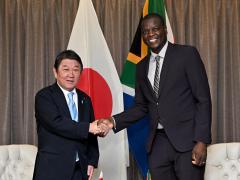
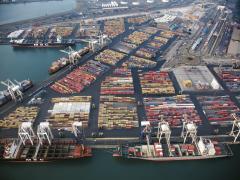
After the Japanese quake/ tsunami crisis, one of Africa’s major trading partners is on the blink, according to Simon Freemantle and Jeremy Stevens, economic research strategists at Standard Bank – who have especially released their latest study on the situation to FTW. “Japan has, traditionally, been one of Africa’s most relevant trade partners,” said the economics duo. In the immediate aftermath of the earthquake, it is likely that Japan’s demand for African commodities will taper off, according to Freemantle/ Stevens. “Firstly, their own economic slowdown means that fewer resources will be needed,” they said. “Japan is heavily dependent on the manufacturing sector – most notably vehicles and consumer electronics – which account for just under a quarter of output.” They pointed out that several large corporates had operations in the areas most affected. For instance, Honda, Toyota, Mazda, Nissan, Suzuki and Mitsubishi have each temporarily suspended their operations. Moreover, it’s not simply vehicle makers that have been affected: Sony, Toshiba, Panasonic, Hitachi, Canon and Nikon have shut production at several plants. “A fall in production means less demand for Africa’s commodities,” said Freemantle/Stevens, “like mineral fuels, precious metals, iron ore and wood.” A second factor leading to a tapering off in Japanese demand for African commodities is that Japan is an enormously important global consumer – often providing an end market for products that have been created by an increasingly globalised supply chain. “Africa’s raw materials have proven particularly agile in attaching themselves to global supply chains,” said Freemantle/Stevens, “as direct inputs to the manufacture-for-production in China, Germany and many others.” A third inhibiting factor is that Africa’s exports, again mostly of commodities, have benefited from the industrialisation that has occurred in key emerging markets, like China and India, which export a vast amount of goods to Japan. “Naturally, the near-term fall in Japanese demand will present a headwind to economic activity in these emerging economies,” said Freemantle/Stevens. A final factor is that events in Japan will affect prices of commodities, which will impact on Africa’s terms of trade. “Already, palladium and platinum have declined by 10% and 5%, respectively, since the earthquake,” said Freemantle/Stevens. “It is important to note that these implications are in the near-term. In the longer term the impact is far less clear. Recall, approximately 9 700 megawatts of nuclear power generation capacity has been shut down in Japan, representing about 8% of the country’s total power generation capacity. “It is plausible that in the rebuilding phase that is inevitable, the demand for Africa’s commodities could increase.”
Economists analyse impact of Japan earthquake
Comments | 0