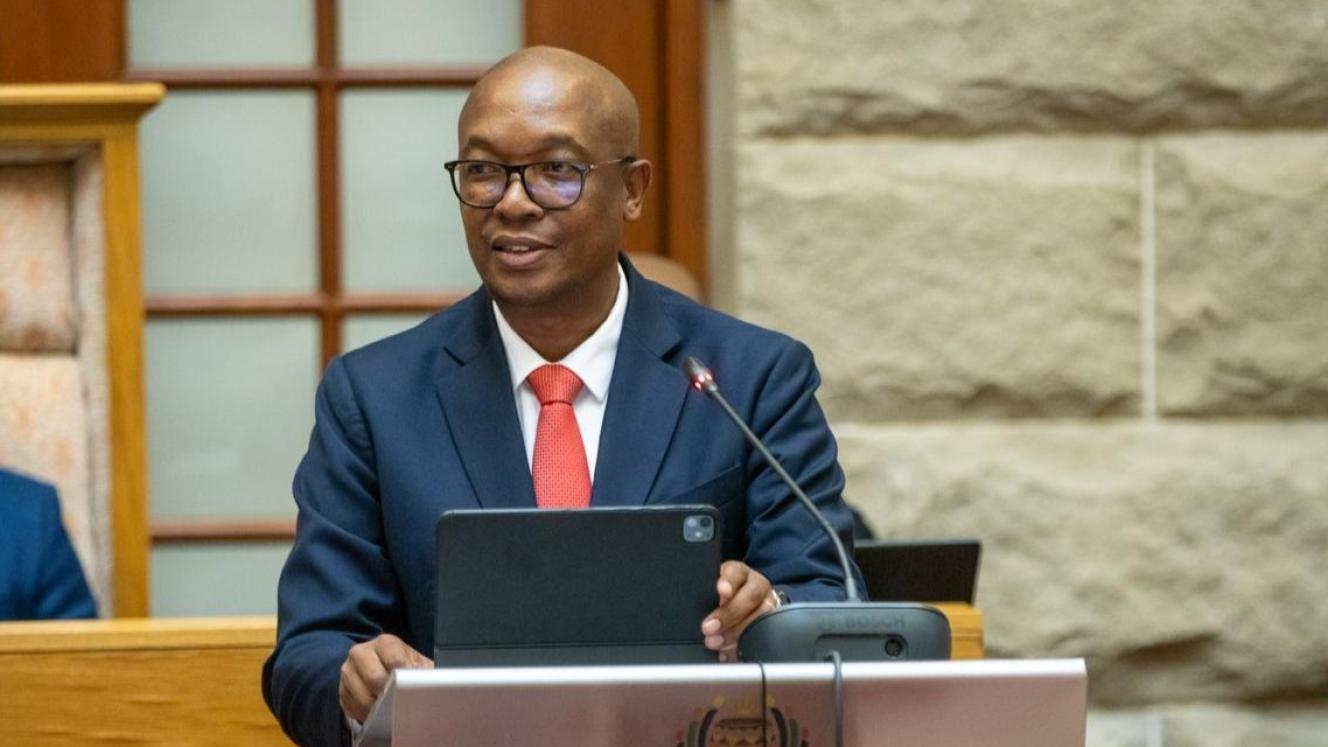
Trade, Industry, and Competition Minister Parks Tau’s Budget Vote places export resilience, local industrialisation and targeted trade agreements at the centre of the country’s growth agenda.
Addressing a National Assembly mini-plenary on Tuesday when he tabled his department’s R130.6 billion 2026/7 budget, Tau highlighted the complex international headwinds impacting local competitiveness, including supply chain disruptions sparked by the Middle East war.
However, he said the newly adopted Industrial Development Strategy (IDS) provided a consistent, forward-looking roadmap built on decarbonisation, diversification and digitalisation.
"We are clear that this strategy is about… using trade policy to support export resilience and growth."
He said a core pillar of the DTIC’s growth strategy relied on optimising bilateral trade agreements to benefit local manufacturers.
Tau highlighted that trading under the China-Africa Economic Partnership Agreement (CADEPA) framework that commenced on May 1, granted South Africa duty-free access to a 1.4 billion-strong market in targeted sectors.
"Our aim is to change the composition of trade with China from exports comprised mainly of commodities (93%) to significantly increasing manufactured and value-added products," Tau said.
Meanwhile, trade with the United States remains robust following the extension of the African Growth and Opportunity Act (Agoa).
South African exports to the US climbed from R238 billion in 2024 to R260 billion in 2025, with over 89% operating under the Most Favoured Nation principle.
Tau said the country was expanding opportunities within Mercosur (Common Market of the South) describing the preferential SACU-Mercosur Preferential Trade Agreement as "one of the most significant areas of potential expansion".
He said the DTIC was also unlocking investments in agriculture, mining, capital equipment, and oil and gas with the Gulf Cooperation Council.
Tau said the department had exceeded its investment targets, securing R647 billion against a R450 billion annual target for the 2025/2026 financial year. In addition, the 2026 South African Investment Conference formally launched a second mobilisation drive aiming for R3 trillion in new investment by 2030.
He said the illicit economy, which cost the economy an estimated R700 billion, equating to roughly 10% of GDP, was being addressed through a “critical intervention” of the National Consumer Commission.
“As a measure to protect consumers from illicit trade in the economy, in this financial year we will publish a Track-and-Trace mechanism on goods. The mechanism will mainly target illicit trade in tobacco, alcohol, food, and consumer appliances.”
He said the country's Special Economic Zones had also drawn in over R31 billion across 224 operational investments, creating 28 821 jobs.
Tau added that South Africa’s critical mineral assets had to be a platform for inclusive growth and green industrialisation.
“The DTIC and its entities have been entrusted with consolidated resources amounting to approximately R130.6 billion over the medium term to advance South Africa's industrialisation, economic transformation, and investment agenda. South Africans can be assured that we will guard these resources as would the father of the most beautiful bride in the village.”
© Now Media. This content, including images, is protected by copyright and may not be copied, reused, adapted or republished without permission. If you would like to discuss content-sharing or cooperation opportunities, please contact: editor@freightnews.co.za.