As an importer, exporter,
local manufacturer and
regional distributor of
a variety of engines,
generators and filtration systems
for end customers (including
mining houses) and
consumers, Cummins
South Africa’s supply
chain and logistics
model is continuously
evolving, says Ged
Mackell, supply chain
director for Cummins
Africa Middle East.
He told FTW that
the company had
made “significant
investments” in South
Africa over the past five years, seeing
it as the hub into the southern
African region.
“Improving the level of logistics
maturity is a journey and not an
event. Critical success factors are
ongoing training and operational
change management to establish and
sustain new routines to leverage the
benefits of our investments,” Mackell
said.
New investments include a
20 000-sqm Regional Distribution
Centre (RDC) in Johannesburg,
with Mackell explaining that this has
helped cut down on logistics costs.
“Prior to the establishment of the
RDC, we often had to send products
out via airfreight – subject to high
airfreight rates,” he commented.
Mackell added that Cummins
South Africa was also focused on
improving its demand planning
capability, in collaboration with its
customers to further cut down on
logistics costs and improve efficiency.
“The regional logistics model is
aligned to the global model but it
is evolving into a more centralised
planning model coupled with multilevel
inventory optimisation,” he said.
According to Mackell,
Cummins’ business
in the southern
African region is
mainly focused
on distribution,
importing about
90% of sales into the
region. Engines and
generators are sourced
from the Cummins
global manufacturing
network – including
India, China and the
United Kingdom.
In South Africa, Cummins has a
filtration manufacturing plant for
coolants and air filters which was
recently upgraded. Furthermore,
the company has a Master Rebuild
Centre in Johannesburg for high
horsepower engines which mainly
supports mining customers across
the region.
The locally produced filtration
systems and rebuilt engines are now
exported into southern Africa from
the RDC via road. “Both outbound
and inbound transport is outsourced
to third party logistics operators
(3PLs), which includes warehouse
storage for engines and generator
sets,” Mackell explained.
“However, since there are 30 000
unique parts handled through the
global logistics network , there
was a need for a sophisticated
materials planning and warehouse
management system, which
Cummins developed in-house.
“We believe this exclusive,
integrated supply chain management
system gives us a competitive
advantage as we get our products
to market faster and can more
effectively anticipate our clients’
needs,” said Mackell.
Improving the level
of logistics maturity
is a journey and not
an event.
– Ged Mackell
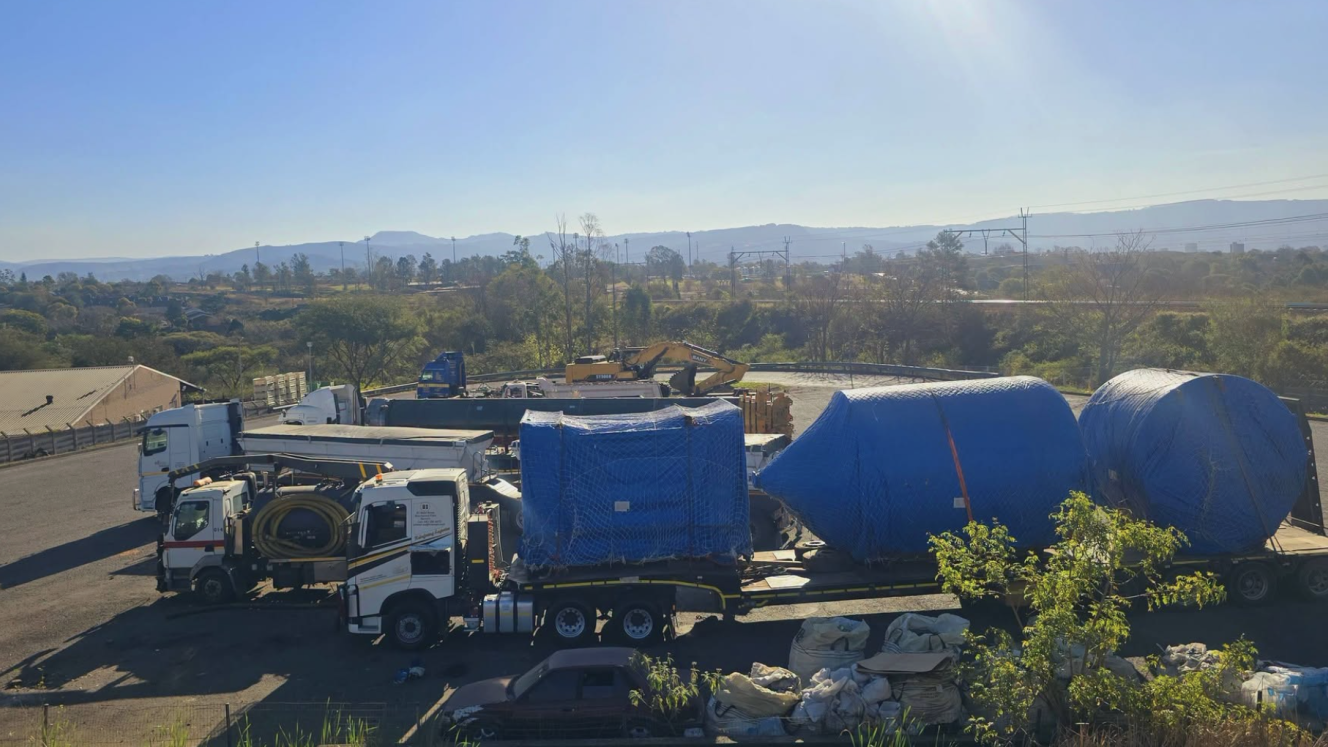
The Cummins QSK 95
is one of their biggest
engines to date.