Upgrades to the DP
World container
facility together
with the dredging
of the approach channel,
quays and turning basins
provide shipping lines with
a new regional transit hub,
says Tejas Nataraj, chief
executive officer of DP
World Maputo.
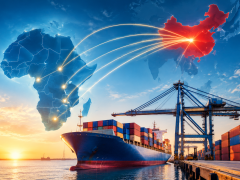
“In order to provide the
trade with another gateway
option we are in the process
of developing the capability
to handle mainline vessels
that will connect the
regional hinterland to
markets in the Far East/
China, east coast of USA,
Mediterranean and North
Europe and the Middle
East.
“To support these strings
we are also planning
regular feeders to all
the major ports on the
east and west coasts of
Africa.” Investment in
rail will provide landside
connections to the
hinterland, with a new
siding due to be completed
by June this year, he says.
Ongoing investment in
the port of
Maputo,
which
includes the
dredging of
the channel
and the
addition of
night-time
navigation
aids to
enable 24-
hour access
to the port,
will attract
shipping
lines back to
the port, he believes.
“Ports in the region,
including other ports in
Mozambique, have limited
draught.
“With the investment
in the Maputo container
terminal DP World will
be able to serve as a
termination point, with
smaller feeders serving
other shallower and
perhaps
more
congested
ports on the
east and
west coasts
of Africa,” he
says.
DP World’s
immediate
target is a
greater share
of the 1.5 to
two million
TEUs which
are in a
catchment
area that is closer to
Maputo than Durban or
Richards Bay.
Despite this geographic
advantage Maputo only
handled around 4% (or
100 000 TEUs) of the
target market in 2016, he
says.
The port operator is now
“aggressively” tackling the
market.
Upgrades include the
acquisition of additional
rubber tyred gantries and
upgrades to the terminal.
Additional space has
been acquired for the
terminal, which will occupy
20 hectares and have 2 400
ground slots, including 200
reefer points by December
2018.
Three super post
Panamax quay cranes will
be deployed by mid-2018.
By June this year the
landside terminal capacity
will have been increased to
0.35 million TEUs a year,
and this will be increased
to 0.8 million by 2022.
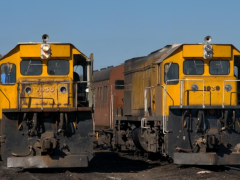
Plans could be brought
forward if there is sufficient
demand, he says.
We are in the process
of developing the
capability to handle
mainline vessels that
will connect the
regional hinterland.
– Tejas Nataraj