Platinum producers are
upbeat about the future
despite the fact that its
price has been at an alltime
low in the past year.
Whilst demand remains weak
and low share prices point to an
oversupplied market the experts
maintain that change is imminent
and that countries like India hold
major potential.
Paul Wilson, CEO of the World
Platinum Investment Council,
believes that prices will improve
sooner than what is expected.
During a panel discussion at the
recent Investing in Africa Mining
Indaba in Cape Town, there were
predictions of major cutbacks in
operations for the immediate future
but there was consensus that the
long-term outlook was positive.
“Platinum shares may have been
deep divers in 2015 but they will
be rising stars in 2016 and we
expect to see share prices recover
somewhat in the immediate future,”
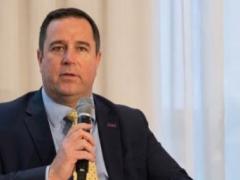
said Stephen Forrest, director and
chairman of SFA.
But now more than ever
producers could not be complacent
and needed to get their games
together because while recovery
was imminent it would not be swift
and the industry would remain
extremely price-sensitive, he said.
According to Andrew Hinkly,
Anglo American platinum executive,
the continued requirement for clean
vehicle emissions would be a driving
force in the platinum sector.
“We will also see demand
come from various regions. India
especially is a region where we
expect to see an increase in demand
as its jewellery sector grows.”
He said in the past few years a
28% compound growth rate had
been seen in India. “More than
225 000 ounces per year going into
that market,” said Hinkly. “What is
most amazing is it represents less
than 1% of the Indian jewellery
market. There is no reason why
the trajectory will not continue to
grow.”
He said China remained the
largest jewellery market for
platinum. “We have had a weak
start to the year, but already it has
picked up. We believe the Chinese
platinum jewellery industry
has only just begun and we are
expecting far more growth in this
market.”
He said there were also areas of
opportunity in the renewable sector
as economies moved to be more
sustainable. “As solar and wind
requirements increase so will the
demand for platinum as the metals
we mine are required in energy
storage.”
But, said Hinkly, that did not
mean the period of uncertainty was
over.
“Cost control will be key in the
next few months for platinum
producers,” he said.
Ben Magara, Lonmin CEO, said
of the mine’s 11 existing shafts only
about four or five were considered
good producing ones and they
would be kept going.
“Given the prices that we are
seeing at the moment it is critical
to mine for value and not the old
traditional mining for volume.”
He said they would continue to
run those shafts producing good
value but the rest would be shut
down until such time as prices
improved.
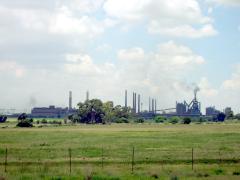
CAPTION
Lonmin platinum mine in Marikana.