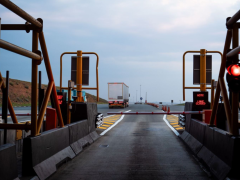
Temporary import permits ruling in the spotlight THE AGENTS at Beit Bridge border post are trying to strike a deal with customs as a means of solving the contentious issue of the TIP:v:CVG, and save them from multi-million rand bills from customs. Last December, SAAFF (SA Association of Freight Forwarders) received notification from customs in Pretoria that they intended to stop the use of commercial vehicle guarantees (CVGs) - controlled by the agents - and replace these with customs' own-controlled temporary import permits (TIPs). The CVG scheme had been in place for some years, and allowed agents to monitor the fact that vehicles carrying goods for them into SA had in fact left the country after that delivery. If any vehicle remained in the country - and the agents were hit with a demand from customs for duty and VAT on that vehicle as an import - they were then covered by the guarantee. Amongst other reservations about the new customs procedure, SAAFF also expressed serious doubt about the legality of a TIP signed by a driver who is almost invariably not the owner of the vehicle. "Despite our having expressed a number of serious misgivings," said executive director Edward Little, "customs nevertheless went ahead and implemented the TIP." But, Little added, it would now seem that the necessary controls were either not put in place, or were not up to the job. "Of their own admission," he said, "this has proved to be grossly inadequate. Clearance "Customs have now demanded that the agents take responsibility for all of the vehicles that entered the country - and which customs are unable to prove exited within the permitted period. They have also "scheduled" a number of agents in Beit Bridge - under pain of not having their licences renewed - with totals as high as R 1.9-million, R3-m, and R8-m. And the agents no longer have bonds to fall back on. To overcome this possibly costly situation, the Beit Bridge agents have proposed an alternative plan. They are trying to come to an agreement with customs for the authorities to stamp two TIPs - one for the driver, one for the agent. "The control of the paperwork still remains with the agent, and the vehicle ingress/egress will be controlled by customs," said Little. The agents have also proposed that, if the driver decides to use another border post for exiting the country, he must have a clearance from the agent to do so. "But," said Little, "if customs allows a vehicle to leave the country without the TIP or clearance, then the whole agreement would fall apart." The proposal has been put before customs - and now awaits their decision.
Customs and agents seek solution to Beit Bridge impasse
Comments | 0
© Now Media. This content is protected by copyright and may not be adapted or republished. If you would like to discuss cooperation opportunities, please contact: editor@freightnews.co.za.