The latest Operation
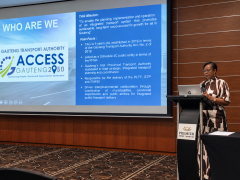
Phakisa initiative
highlighted at a recent
meeting held by the SA
Maritime Safety Authority
(Samsa) in Pretoria has
met with some considerable
criticism.
It concentrated on the
registration of vessels on
the SA Ships’ Register,
specifically by promoting a
policy of cargo reservation
to SA-registered vessels.
And, according to
documentation on the
meeting in the possession of
FTW, Samsa said that this
policy was to:
• Reserve all cargo
carried between
ports on the SA coast
to SA-registered
vessels (cabotage);
• Reserve 40% of all
cargo carried out of or
into SA for carriage
on SA-registered
vessels; and
• Recognise the right
of other countries
in the Southern
African Development
Community (SADC)
and the African
continent to similarly
reserve 40% of all
cargo carried out of or
into those countries
for carriage on their
national lines.
A speaker at the meeting
also highlighted the fact that
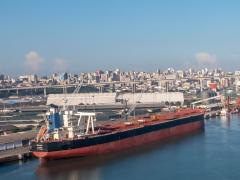
two Capesize vessels had very
recently been registered on
the SA register. And Samsa
indicated they expected further
vessels to be registered shortly.
A main point under
discussion focused on potential
difficulties with, and additional
costs of, registering on the SA
Ships' Register.
Another main point
discussed was that SA had no
clear maritime policy about
cabotage and regional and
continental cargo reservation
– something that hindered
shipowners from flying the SA
flag.
But the whole business of
the SA register – and pushing
for membership with cabotage
and cargo reservation shipping
– has met with some serious
criticism of their economics and
legality.
Andrew Robinson, director
and maritime law specialist
of Norton Rose Fulbright,
suggested that “it would be
wonderful to have a thriving,
well-populated ship’s register in
SA”. But he added that he had
yet to be persuaded that this
country had the fundamentals
in place to support such a
register. “The message from
those who have run shipping
lines into SA ports,” he told
FTW, “has been that SA is not
an attractive register at this
stage.”
He was also not convinced
that there was sufficient cargo
moving out of SA to make
running a dedicated shipping
line viable. “I am not sure what
the tipping point would be,” he
added, “but I cannot see the
already hard-pressed coal and
iron ore traders, who require
a steady supply of vessels,
wanting to rely on there being
SA-registered ships available to
uplift their cargoes.”
His fellow director and
maritime law specialist at
Norton Rose Fulbright SA,
Captain Malcolm Hartwell,
added his comments.
He pointed to the
department of transport
(DoT) draft green paper on SA
Maritime Transport Policy for
2015, which discusses a variety
of things including cabotage. It
also proposes mechanisms to
encourage development of SA
shipping and ship owning.
On cargo reservation
cabotage and shipping
subsidies, Hartwell noted
that the paper said: “Cargo
reservation, cabotage
restrictions and subsidies are
frequently proposed wherever
measures to promote a
national shipping industry in
SA are under discussion. Such
proposals do not deserve the
consideration
they are often
given as they
divert attention
from practical
proposals
that could be
implemented.
“Similarly,
there is not
much domestic
cargo that uses
cabotage, even
if the existing
coastal shipping company,
which is partly SA-owned,
is regarded as foreign.
Furthermore, the restriction of
the transportation of domestic
cargo to SA-flagged coastal
ships is likely to result in a
loss to domestic production
to foreign imports as most of
it is locally produced sugar
moving from Durban to Cape
Town. Cabotage restrictions
could raise the shipping costs
sufficiently to render imports
cheaper.
“Cargo reservation, cargo
restrictions and shipping
subsidies are measures that
have been abolished by many
other trading countries and
their adoption by SA would not
yield nett economic benefits.”
The green paper concludes
by stating that: “If government
wants a local register, it must
be clear about the reasons
for having it and also about
the target size of a national
fleet. In the absence of
very compelling reasons,
government should be cautious
about state-owned companies’
fleet propositions because the
capital intensity and potential
losses of such a venture could
make South African Airways
(SAA) pale in comparison.”
Given this, Hartwell
stressed that the statements
made by Samsa and the steps
being taken by them appeared
to be directly contradictory to
their own parent bodies’ draft
policy.
But, is there
a story behind
the story of the
two Capesize
bulkers having
recently been
registered
on the SA
Register?
FTW
research
revealed that
the Cape
Orchid was
a 172 569 tonne deadweight
vessel built in 2001 while the
Cape Enterprise was built
in 2003, and was a 185 909t
DWT vessel.
We also discovered that the
ship management was being
handled by Fairmont Shipping
(Canada). The only detail of
the shipowners is in a Marine
Traffic.com photograph of
the Cape Enterprise, showing
the K Line logo on her funnel.
But this has not yet been
confirmed.
Now what was Samsa
able to offer that persuaded
the ship owners of these
two big tonnage vessels
to bear the extra cost of
registering on what has been
universally declared to be an
“uncompetitive” SA Register?
Mutterings in the SA
shipping industry hinted that
there might be some other sort
of other deal behind this rather
strange decision.
INSERT & CAPTION
Cargo reservation,
cargo restrictions and
shipping subsidies
have been abolished
by many countries.
– Malcolm Hartwell
Criticism greets government's cargo reservation plans
Comments | 0
© Now Media. This content is protected by copyright and may not be adapted or republished. If you would like to discuss cooperation opportunities, please contact: editor@freightnews.co.za.