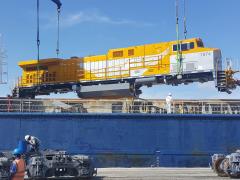
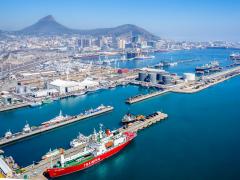
Southern Africa’s port ecosystem is entering a new era, defined less by isolated terminal performance and more by how effectively ports connect into wider logistics corridors. As congestion, infrastructure constraints and rising customer expectations place increasing pressure on supply chains, the focus is shifting decisively towards digitalisation, corridor integration and operational resilience. “Ports are increasingly being viewed as integral components of end-to-end logistics corridors rather than standalone assets,” said Darren Jankelow, head of sales – maritime cranes and construction machines at Liebherr-Africa. “There is also a growing focus on climate-resilient infrastructure and lower- emission operations, with rising interest in electric equipment, energy-efficient terminals and improved asset utilisation. Digital tools are becoming essential to support planning, maintenance and operational visibility, particularly as ports work to rebuild capacity and reliability.” He said terminal operations were evolving through a pragmatic focus on recovery, reliability and efficiency. “In South Africa, Transnet Port Terminals (TPT) and its personnel deserve credit for the progress made in stabilising operations, restoring equipment availability and improving productivity under challenging circumstances,” he said. A key focus area has been the procurement and commissioning of new ship-to-shore and rubber- tyred gantry cranes, alongside improved maintenance practices. But as performance improves, competition is increasingly being shaped by what happens beyond the terminal gates. Maputo Port Development Company (MPDC) chief executive officer Osório Lucas said the region’s ports were increasingly competing on the quality of the wider logistics experience rather than port operations alone. “The same transporter that comes to Maputo goes to Durban or Richards Bay,” he told Freight News. He said sustained growth depended not only on investment in systems and infrastructure, but on ports being supported by corridors that work consistently. Ports in Durban, Ngqura and Richards Bay remain well positioned for growth, supported by their scale, strategic hinterland connections and the operational recovery now under way. “In South Africa, the progress achieved by TPT is beginning to translate into improved reliability, stronger productivity and renewed confidence from shipping lines and cargo owners,” said Jankelow. “The Port of Maputo is also continuing to demonstrate strong growth potential, supported by private-sector investment, corridor development and increasingly efficient terminal operations.” Cape Town Container Terminal, he said, stood out as a port with solid prospects, particularly given TPT’s investment in renewing its fleet of rubber-tyred gantry cranes, designed to operate in extreme weather conditions. Further west, the Port of Walvis Bay continues to make inroads. In December, African Global Logistics (AGL) commenced operations at a $200 million terminal, adding to the port’s fast-growing maritime expansion efforts. According to Jankelow, ports across the region are demonstrating how targeted investment, modern equipment and operational expertise can unlock capacity and improve performance. LV
Corridor integration takes centre stage
Comments | 0
© Now Media. This content is protected by copyright and may not be adapted or republished. If you would like to discuss cooperation opportunities, please contact: editor@freightnews.co.za.