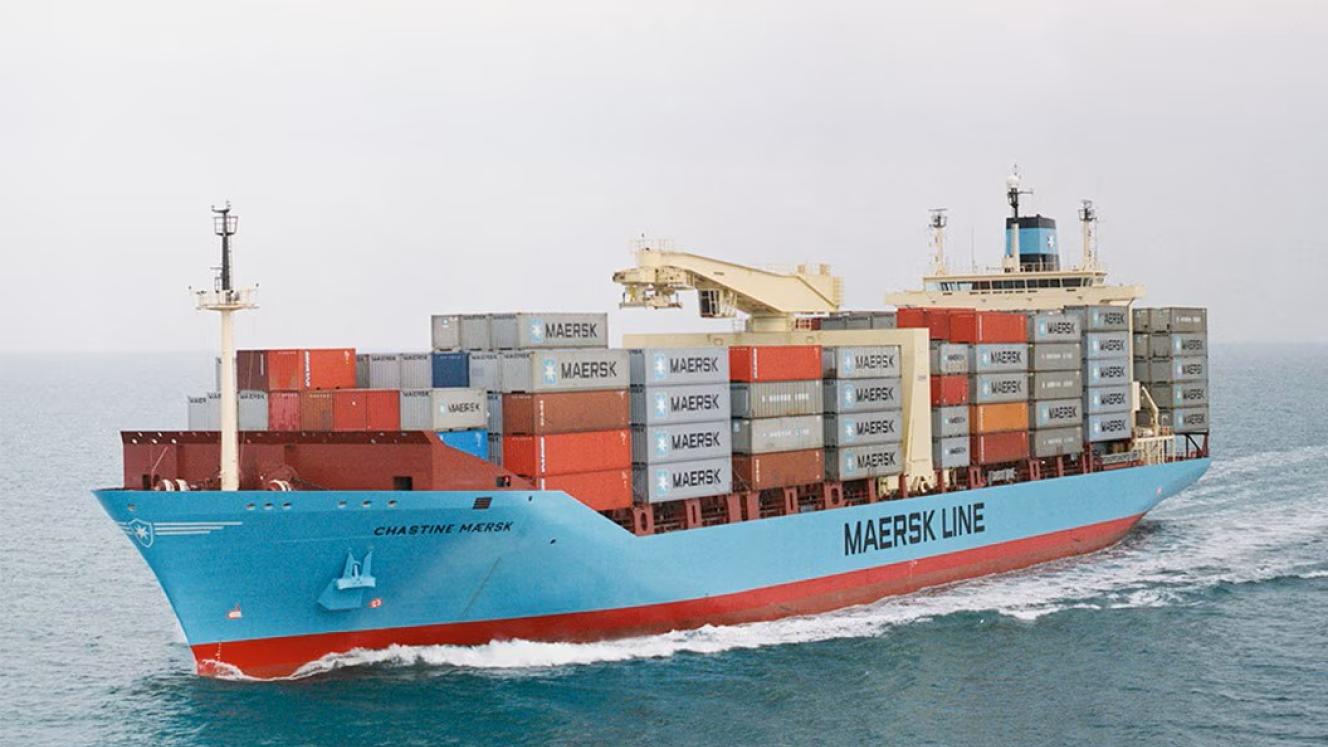
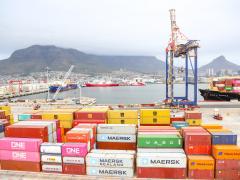
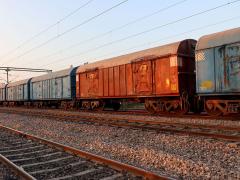
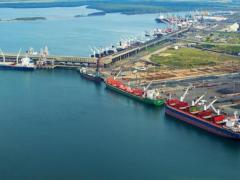
Trial shipments of copper bound for the Far East are being exported through Walvis Bay in order to demonstrate the advantages of the Walvis Bay-Ndola- Lubumbashi Development Corridor, says Andrew Sinyangwe, the Zambian business development manager for the Walvis Bay Corridor Group (WBCG). This is in addition to growing volumes of copper bound for Europe being transported along the corridor. “Recently we had buyers from Germany who gave strict instructions that the copper had to be shipped through Walvis Bay,” he says. Volumes are up to 2 000 tons of copper a month bound for Europe, and Sinyangwe believes there is potential for much more, with the main stumbling block being an empty return leg. “Zambian truckers want back loads,” he says. Zambian companies are the preferred transporters for the mines. Sinyangwe has been working with the contacts he made and using the knowledge of the mining industry he gained while working on the Copperbelt prior to joining the WBCG in order to find solutions. One is to route the importation of chemicals, equipment and other supplies needed by the mining industry through Walvis Bay. Mines in both Zambia and the Democratic Republic of Congo (DRC) are conducting transport risk assessments on the Walvis Bay-Ndola-Lubumbashi corridor in order to avoid the congestion at other ports in the region. “We are talking to the business people in the DRC as well. At present their imports from Belgium, for example, come through Durban. By using Walvis Bay they knock off 12 to 14 days’ sailing time, in addition to having a shorter road leg,” he says. He is so confident of the route that he plans to take the business leaders on a road trip from the DRC to Walvis Bay to experience the corridor for themselves. Investment in the corridor has seen the roads, border posts and bridges upgraded, while a joint task force is looking at ways of streamlining customs procedures. The introduction of a direct service between Walvis Bay and the East means that the port can be used for exports to the Americas, Europe and the Far East. Rates to the East are very competitive, according to Sinyangwe. The WBCG has also been working with the Zambian Food Reserve Agency to export surplus maize through Walvis Bay. “We have had two bumper crops, and are exporting to Angola and other African countries. “The same has happened with wheat. Zambia produces some of the best wheat in the world, and we are exporting it to Europe,” he says. Another agricultural export going through Walvis Bay is tobacco from Malawi. “Even though Malawi is much closer to the east coast, exporters have found that Walvis Bay offers lower overall costs and transport times,” he says.
Copper for Far East tries Walvis Bay route
Comments | 0
© Now Media. This content is protected by copyright and may not be adapted or republished. If you would like to discuss cooperation opportunities, please contact: editor@freightnews.co.za.