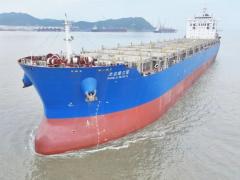
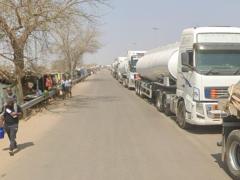
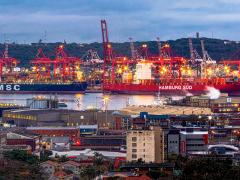
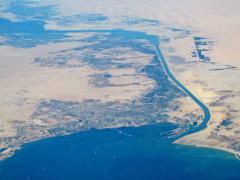
It has been a matter of some debate whether or not ports such as Maputo or the soon-to-be-opened harbour at Ngqura in the Eastern Cape will constitute a real threat to the status of Durban as the country’s leading port. Some analysts believe that the role of the other ports should and will be complementary rather than competitive, and Transnet appears to concur by seeing the Ngqura development as a port that will help relieve the pressure on Durban at peak times. With this in mind Transnet has continued with a policy of increasing capacity at Durban. When Ngqura opens in October this year it will come at a time when congestion reports have become a thing of the past, with pressures on existing terminal facilities having long since lifted. But in any case Transnet says that the intention is to market Ngqura as a transhipment terminal, aimed at capturing a significant number of containers destined for East and West Africa as well as the Indian Ocean region generally. In this Transnet has a good chance of succeeding, but it will bring new challenges not just to Durban but to Port Louis in Mauritius as well – and an interesting couple of years lie ahead for port observers. According to Transnet statistics, transhipments handled at the Port of Durban during the 2008 financial year amounted to 617 478 TEUs – that was 24% of the total containers handled by the port and a small increase year on year of this type of cargo, but still a significant portion of the total containers handled by the port. According to Solly Letsoalo, Transnet Port Terminal’s chief operating officer, the majority of Durban’s transhipment containers were destined for “international” ports. This is probably the main ‘challenge’ facing Durban in the next few years. During 2008 the port handled 2.56 million TEUs – an increase of less than 2% on the previous year – and indications are that 2009 may see an actual decrease, the first time this has happened for some years. Any movement of transhipment cargo to Ngqura instead of Durban will therefore succeed in further reducing volumes at Durban by a fairly substantial amount, while also acting as a significant ‘safety valve’ for the release of pressure on a straining Durban port when busier times return. Maputo – only alternative? Realtors always say that when selling a house one of the most important factors is always position, position, position, and this principal applies equally to ports in relation to their markets. In that regard it is only Maputo that can act as a realistic alternative to Durban – no matter what the lobbyists for the new Eastern Cape port might suggest. But Maputo port comes with its own challenges, not the least being that it is not currently geared to handle any sudden substantial increases in container volumes, either in terms of terminal capacity or in regard to the size of ships that Maputo can handle. Which raises another other question – what is it that influences where ships will call? Ships will always call where market forces dictate – and in this regard the tail seldom wags the dog as some shipping lines have suggested. But at the same time the ports have to be capable of accommodating the type and size of ships that other market forces are dictating – such as the cascade effect which has seen South Africa already receiving calls from ships of 5 000 and 6 000-TEU capacity long before any of the ports have been suitably readied to receive them. 9000-TEU ships As is reported elsewhere in this feature, the port of Durban has undergone a major entrance channel widening and deepening programme mainly for this purpose, and will be able to accommodate ships of up to 9 000-TEU capacity if necessary. In that respect Transnet is wisely planning ahead of demand and – together with a similar programme of deepening the container terminal basin at Cape Town along with the development of Ngqura – South Africa will be well equipped to handle these much larger ships. But at Durban sadly none of the container berths have yet received any remedial work in preparing them to receive ships with a draught greater than 12.5m. Geotechnical surveys of the areas alongside each container berth have been concluded and Transnet will soon be in a position to make a decision on whether further action to deepen the actual container berths can proceed. But even with the utmost haste, for which Transnet is unfortunately not noted, it is unlikely that Durban will have deep water container berths to handle a fully loaded late generation container ship for some years to come. Currently only Ngqura meets the requirements here, although work at deepening the berths at Cape Town is well advanced, but both are constrained by being located further away from the main Gauteng markets. This may well result in Ngqura becoming a transhipment port for Gauteng cargoes with a system of feedering containers to Durban for onward land transport to Gauteng introduced.
Complementary or competitive?
Comments | 0
© Now Media. This content is protected by copyright and may not be adapted or republished. If you would like to discuss cooperation opportunities, please contact: editor@freightnews.co.za.