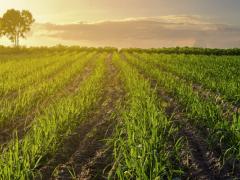
As the world’s climatic excesses take their toll, one of the casualties is the apple industry. Insiders foresee a decline of apples from southern hemisphereproducing countries, among them South Africa, to export destinations in the northern hemisphere. “You will definitely see a shortage this year, not only locally but in exports,” says Charles Hughes, CEO of Tru-Cape, South Africa’s biggest apple and pear exporter. Successive weeks of intense heat will reduce South Africa’s exports significantly this year while the apple industry in Chile, a major global producer, is yet to recover from a devastating earthquake. China lost 67 0000 ha of apple crops due to massive frost (South Africa only has around 15 000ha under cultivation) – and New Zealand was hit by foul weather of one kind or another. Anton Rabe, CEO of Hortgro Services, an umbrella body serving the SA Apple and Pear Producers’ Association among others, says the intense heat evidenced in most fruit-producing areas will result in an estimated 14% reduction in apple exports this year, to 22 949 916 cartons (12.5kg equivalents), while Tru- Cape itself expects to export 1.5 million fewer cartons. Early and mid-season apple cultivars suffered most, such as the Gala group and Golden Delicious, down 21% and 20% respectively. Of great concern to all South African exporters is the relentlessly strong rand which shows no sign of letting up. Last week, the International Monetary Fund, in revising upwards South Africa’s economic growth to 2.6% this year, warned of several factors that would “temper” growth – high unemployment, tight credit and rand strength. “Tight credit,” says Hughes, “is a huge problem for us. As international traders we take out credit insurance but our rating has been cut drastically due to the global squeeze so we, indeed all countries, face a lot of risk.” The rand was 24% stronger against the US dollar between industry Weeks 4 and 11 and Hughes foresees “a huge problem” for the industry should these levels persists beyond 2010. Fully endorsing the view of the SA Fruit and Vegetable Canners’ Association that South Africa, as a developing nation, should follow the lead of similar countries to ensure that “exports are not strangled by an overvalued currency”, Hughes believes the only way this can be addressed is for the interest rate to come down.
Climatic excesses bite into apple volumes
Comments | 0
© Now Media. This content is protected by copyright and may not be adapted or republished. If you would like to discuss cooperation opportunities, please contact: editor@freightnews.co.za.