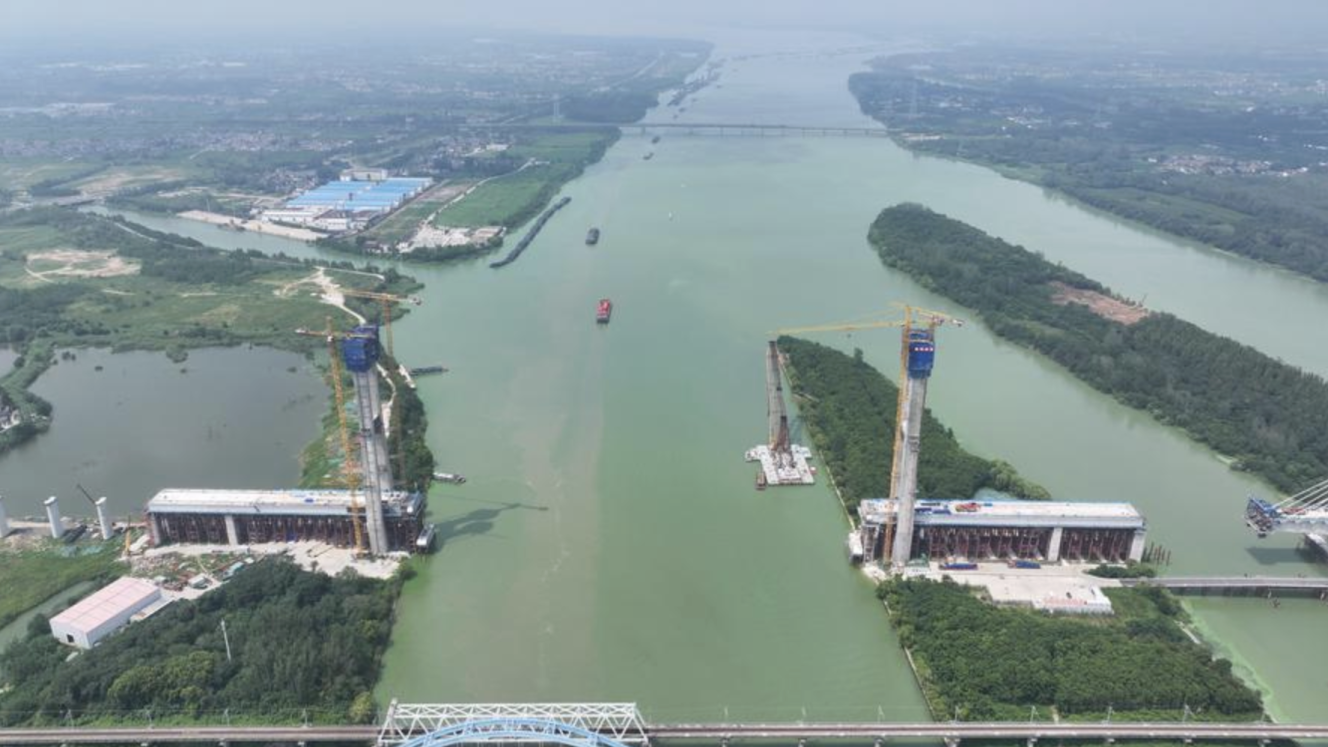
China’s Pinglu Canal project has passed another construction milestone as Beijing pushes ahead with the 134-kilometre inland waterway aimed at linking southwest China directly to international shipping routes via the Gulf of Tonkin.
According to Chinese news agency Xinhua, the opening this week of the Zicai Bridge – one of 27 planned canal crossings – highlights progress on the massive infrastructure scheme, which is scheduled for completion by the end of the year.
The canal will connect Nanning, capital of Guangxi province, to the Beibu Gulf, following much of the Qinjiang River route before reaching the coast. Once operational, it is expected to allow cargo from southwest China to bypass Guangdong province, traditionally the country’s main southern export gateway.
Chinese authorities say the project could shorten inland-to-sea transport routes by about 560 kilometres, reducing freight costs and transit times for bulk cargo and manufactured goods.
The canal has been designed to overcome a total elevation difference of about 65 metres through a system of three double-lane ship lock hubs. Authorities have also confirmed that 27 bridges are being built or upgraded along the route.
According to official project updates, the canal carries a planned investment of CNY72.7bn (US$10 billion), with close to 90% of the budget already spent.
The project forms part of China’s broader strategy to strengthen trade links with Southeast Asia as exports to the Association of Southeast Asian Nations (ASEAN) continue to grow.
Chinese customs data showed exports to ASEAN increased by 13.4% in 2025, while exports to the United States declined by 20% in dollar terms.
Beibu Gulf Port, the canal’s coastal endpoint, handled more than 10 million TEUs in 2025, reinforcing its role as a growing regional gateway.
Environmental concerns remain under scrutiny as construction continues through sensitive river systems and wetlands. Project developers say the canal includes 36 ecological conservation zones, wildlife crossings and fish migration facilities, alongside real-time ecological monitoring systems.
The canal is expected to become operational by the end of next year.