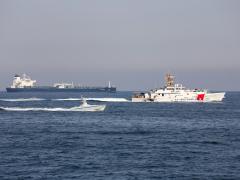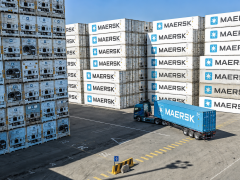
Shippers may not always know what their legal position is when disruption stops freight movement, and the halt that Hormuz has placed on supply-chain efficiency as Iran refuses to relax its grip on the waterway is a case in point.
But according to Dr Lina Jasutiene, founder and managing director of global cargo-claims recovery firm in Geneva, Recoupex, the “legal logic is quite simple”.
The surcharges that have been levied by various lines because of the Hormuz situation making transits too risky, are justified, provided that a cargo-carrying vessel is moving.
However, if a ship is stuck and nothing happens and there’s no plan, no expected time of arrival, and no loss mitigation recommendations, “charges become legally questionable”.
She recommends that cargo owners charged “storage” by carriers stuck at sea, such as the Persian Gulf, should familiarise themselves with the minutiae of their legal rights.
This is especially in relation to a recent case where a carrier circulation indicated that it would charge US$7 per day per TEU because of not being able to pass through Hormuz.
Jasutiene says about force majeure: “It may excuse delay, but it doesn’t open a new billing stream.
“The storage on-board fee is not part of freight, nor is it the same as EBS (emergency bunker surcharge) or war surcharge, where the carrier is still performing (or attempting to perform) the voyage.”
What should exporters do? asks Jasutiene.
They should “challenge the charges formally and without delay”.
“Do not rush to pay.”