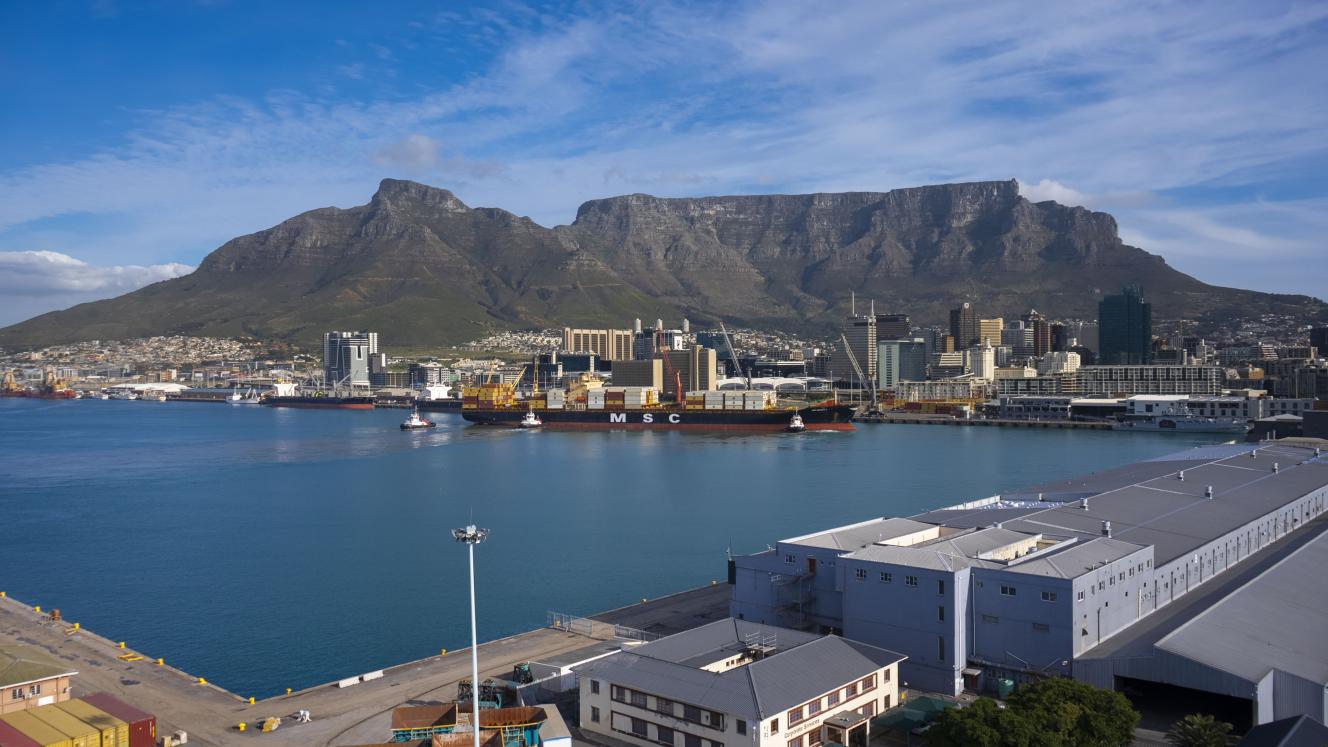
Vessel turnaround times at the Port of Cape Town have improved significantly, with industry stakeholders confirming that fewer ships are waiting at anchorage and vessels are increasingly able to berth on arrival.
Container terminal ship turnaround time fell from an average of 103 hours in the 2023/24 financial year to 74 hours in 2025/26, according to the Transnet National Ports Authority (TNPA).
Performance has improved further in the current financial year, with year-to-date turnaround times averaging 58 hours.
Average vessel waiting times at anchorage have also declined from 127 hours in 2023/24 to 79 hours in 2025/26.
TNPA attributed the improvement to better terminal handling rates and fewer marine-related delays.
The permanent deployment of ten shore tension units has reduced downtime caused by long-wave conditions by 92% since 2023/24.
Container volumes increased by 6.5% year on year during 2025/26, supported by record deep-sea import and export volumes.
Improvement visible on the ground
The operational gains reported by TNPA are increasingly evident to port users.
“Performance has certainly picked up, and vessels are now almost at the point where they are berthing on arrival,” Exporters Western Cape chairman Terry Gale told Freight News.
Gale said favourable weather had contributed to the improvement, while investment in new equipment had strengthened the port’s ability to operate during periods of higher winds.
The improvement is also reflected in the Western Cape Government’s monitoring of port performance.
“Our Western Cape Government digital logistics planning platform has shown a significant improvement in ship turnaround time since the end of last year,” said Glen Steyn, Director: Maritime Logistics Development at the Western Cape Department of Economic Development and Tourism.
“This is important because it is the metric that the World Bank uses to prepare the Container Port Performance Index.”
However, Steyn cautioned that sustaining the improvement would require more than equipment investment, highlighting the importance of skilled operators, effective responses to weather disruptions and better coordination across the logistics chain.