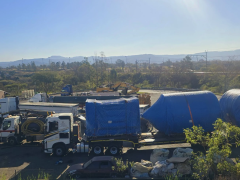
When it comes to project work the devil is truly in the detail, says Les Dodds, discipline manager: logistics for engineering, contracting and construction services company Murray & Roberts. “Many people think they are experts at project cargo but it’s one of those areas where you have to have a huge amount of logistics knowledge along with experience,” says Dodds. And having been involved in major projects across the globe, he is a firm believer in preparing well in advance and ensuring that all the bases are covered. “It is important to take all the aspects into consideration from the cargo’s point of origin to the final destination – at no point can you wash your hands and say it’s a done deal. When it comes to project cargo you have to be hands-on all the way and prepare far in advance of the start of the project.” But no amount of planning and preparation can ever measure up to the reality of working in the field. “Anything can happen during the transportation phase – from the ship coming in late to the truck breaking down. Being prepared for the unknown is just as important.” And be it the Dubai International Airport in the United Arab Emirates or the Medupi Power Station in the remote northern regions of South Africa, it’s all in a day’s work for Murray & Roberts. A large part of the company’s success comes down to insistence on following strict policy and procedures, regardless of what it is working on. Not only does this ensure the safety of the people involved, but it also ensures that risk is managed throughout a project – be it financial, environmental or just protecting the integrity of the brand. According to Dodds another important link in the success of project cargo is good, reliable and well-trained drivers – something on which South African transport companies too often don’t place enough emphasis. “You can never underestimate the role the truck driver plays. I am in essence just hiring your big taxi and your driver must be able to respond to any foreseeable situation around my cargo. Not only are you looking at a person being responsible for an expensive truck, but also for cargo that can cost millions.” And with more projects taking off in Africa, more opportunities are arising in the sector. “It means being committed though. In some ways project cargo can be seen as very simple – a set of wheels moving cargo from one point to another,” says Dodds. “But when one takes all the factors into account one realises how very complex it is and how critical industry knowledge is and how necessary it is to always be on top of regulations to ensure compliance.” Dodds says while South Africa has proved it is just as capable as anyone else in the world to do project cargo well, the country does have to invest more time and money in the training of drivers. “The market is growing not just in South Africa but in Africa as a whole. We need to continuously work on improving our skills and knowledge base, while getting to really understand the environment we work in.” Equally crucial is industry support for initiatives like the RTMS, an industry-led, voluntary self-regulation scheme that encourages consignees, consignors and transport operators engaged in the road logistics value chain to implement a vehicle management system that preserves road infrastructure, improves road safety and increases the productivity of the logistics value chain.
Being preparedfor the unknown is crucial’
Comments | 0
© Now Media. This content is protected by copyright and may not be adapted or republished. If you would like to discuss cooperation opportunities, please contact: editor@freightnews.co.za.