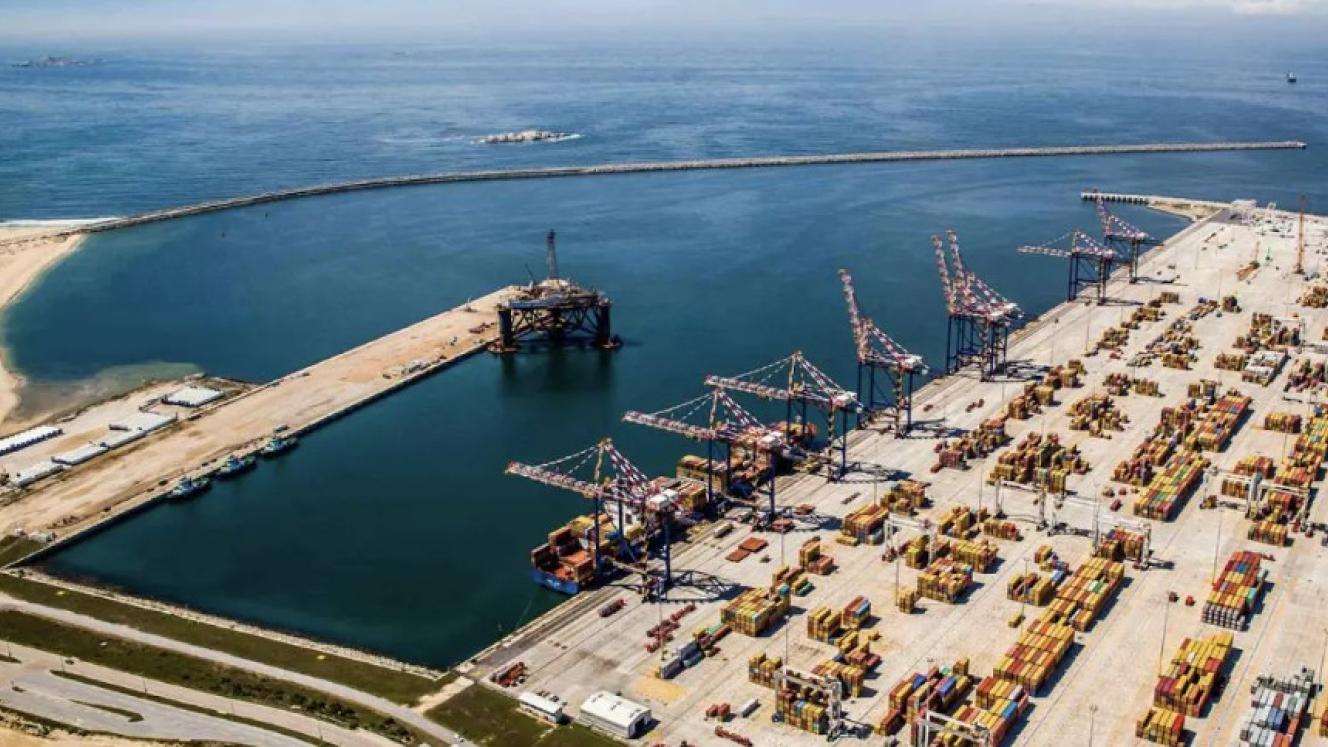
Transnet has refuted allegations that berthing unpredictability at the Port of Ngqura is contributing to shipment delays experienced by freight forwarders dealing with arms trade cargo intended for the Middle East and the European Union.
Although a large part of the import-export dilemma involves application delays for dangerous cargo (DG) permits by the National Conventional Arms Control Committee (NCACC), quayside complexities are adding to forwarders’ frustration.
Sugie Govender of Transglobal has explained that manufacturing dynamics of explosives are pivoted on fine timelines, requiring schedule reliability to keep shipping costs down.
But apart from digital downtime at the NCACC, without manual process contingencies to avoid permit delays, forwarders also have to deal with detention and demurrage charges because of port delays.
Govender has said that at about R50 000 a day, charter vessels specialising in DG shipments add significant expense when they can’t dock in time.
Asked how Transglobal’s clients absorb the impact, he said the industry he deals with works with long-term contracts that are heavily invested in specialised manufacturing concerns.
“But the rand’s strength to the dollar isn’t making things easier,” he said.
South Africa’s trade in this sector could have been significantly stronger had it not been for permit and port delays, Govender added.
But Transnet has said it’s complying with the necessary requirements contained within the confines of the National Ports Act, especially in relation to hazardous cargo.
Asked to respond to allegations of “preferential berthing”, schedule reliability, contingencies to mitigate delays, and related trade facilitation by the logistics utility, Transnet National Ports Authority (TNPA) said: “Appointed terminal operators are permitted to conduct their own planning and manage terminal operations provided they meet committed efficiency targets while complying with safety requirements.”
The ports landlord division added that “operators have commercial agreements with various shipping lines, which are not limited to a single shipping line.
“TNPA does not interfere with commercial agreements made between terminal operators and shipping lines. Additionally, TNPA has established procedures for the transportation and handling of dangerous goods, specifically Class 1 explosives which are considered high risk.
“TNPA ensures that safety is maintained for the port, its users and surrounding communities prior to approving the movement of dangerous goods within the port. TNPA remains committed to playing its oversight role on terminal operations and upholding safety standards”.
Govender says he acknowledges TNPA’s emphasis on safety and compliance in the handling of Class 1 explosives – this is non-negotiable and fully supported by industry.
“However, the response does not address the core concern raised by exporters and freight forwarders, namely the consistent and repeated displacement of charter vessels, despite full regulatory compliance and advance planning.
“While TNPA positions berth allocation as a matter between terminal operators and shipping lines, the National Ports Act assigns TNPA a public-interest oversight role over port access. Commercial agreements cannot reasonably result in systemic exclusion of certain cargo types or operators from national infrastructure – particularly where those cargoes underpin strategic export sectors.”
Shedding more light on the plight of forwarders and their clients, Govender stressed that the issue wasn’t necessarily safety, as the sector was largely compliant.
Primarily, disgruntlement at the moment is based on berthing predictability and fairness towards forwarders serving the arms trade sector.
“If Class 1 cargo is perpetually deprioritised at berth level, exporters are left with no practical ability to plan, cost, or honour international contracts – resulting in detention, demurrage, and reputational damage to South Africa as a trading partner,” he said.
“The explosives manufacturing and export sector contributes materially to employment, foreign exchange earnings, and downstream industries. Yet no explanation has been provided as to how this economic contribution is weighed in port planning decisions, nor how repeated delays align with national trade objectives.
“We are not calling for preferential treatment – we are calling for transparent criteria, consistent application of rules, and accountability where public infrastructure outcomes repeatedly disadvantage a compliant sector.
“Without this, safety risks being perceived not as a safeguard, but as a convenient justification for operational inequity.”
Despite his dissatisfaction with TNPA’s response, Govender said there were contractual developments under way that could bring about a 20% allocation for DG cargo by the end of March.
Asked why shipments from the sector appear to be overfocused on Ngqura, he said it was based on volume.
“When we finally get permits, we try and ship as much cargo as possible, and for that we find Ngqura to be the best port for our particular needs.”
As for the NCACC, nothing is forthcoming about the agency’s frequent digital process holdups.
“They’re not even answering their phones,” Govender said.
“Lines of communication are not kept open and we don’t really know what’s going on. The sector is suffering, not only the manufacturers but also those of us who are in the logistics space.”