About 40% of Asia-Europe air cargo capacity has been affected by airspace closure across the Middle East ever since the US and Israel launched a combined military assault on Iran, while retaliation from the latter has brought violent havoc to sea logistics in the area.
According to the Cargo Movement Update (CMU) by the South African Association of Freight Forwarders (Saaff) and Business Unity SA (Busa), flight rerouting and “increasing reliance on cross-border trucking to reach operational airports”, have caused freight rate increases across affected trade lanes.
In addition to the extreme impact of the current conflict on cargo, the escalation of hostilities between warring parties has “exposed vulnerabilities in global jet fuel supply chains”.
According to the CMU, this is after “tanker traffic through the Strait of Hormuz fell by 70–80%, tightening the availability of refined products such as jet fuel.
“Europe is particularly exposed due to its reliance on Persian Gulf supply, while higher insurance costs and longer rerouting via the Cape of Good Hope are pushing fuel premiums higher and increasing delivery times for airlines,” the update says.
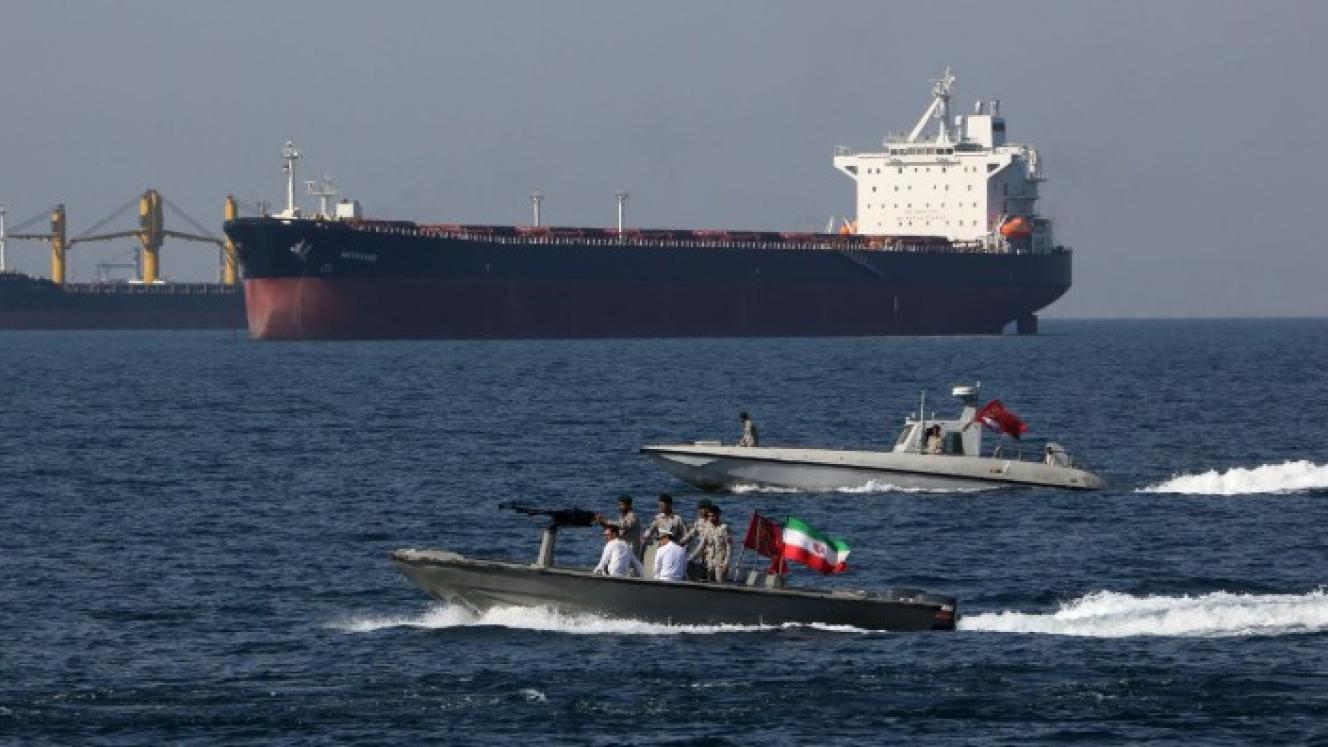
The effect of the closure of the Strait between the Persian Gulf and the Gulf of Oman on oil markets and other shipments through Hormuz cannot be overstated, Saaff and Busa say.
“Military escalation involving Iran has effectively halted most tanker and container movements through the corridor, where vessel transits have fallen by roughly 97%, disrupting a chokepoint that normally carries about one-fifth of global oil and gas shipments.
“Tanker operators and container lines have suspended voyages or diverted to alternative hubs in the Indian Ocean and Western Indian Ocean, increasing voyage distances and operational complexity.”
The CMU adds that global containerised throughput has moderated after December’s record volumes.
“January volumes declined by about 5.4% month-on-month to roughly 16 million TEUs, although trade remained 3.6% higher year-on-year, indicating that the underlying demand environment remains relatively resilient despite logistical disruptions.”
However, despite entrenched resilience in the global freight network, uncertainties prevail.
Primary among these is the oil price.
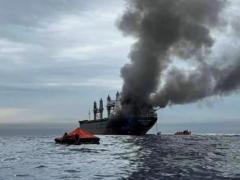
On Friday morning, Trading Economics reported that Brent Crude and West Texas Intermediate (WTI) had edged slightly lower than the previous day’s tumult, when markets reacted sharply to Iran setting fire to two tankers in Iraqi waters.
Tensions were still keeping prices elevated at about $100 a barrel.
The two benchmarks traded at approximately $100.32 per barrel for Brent, down 0.14% from the close on March 12, while WTI was near $96.70 per barrel, up marginally 1.01% today after Thursday’s 10.69% surge.
Britain’s Independent Commodity Intelligence Services (ICIS) said prices had pulled back slightly after Iran's new Supreme Leader, Mojtaba Khamenei, had reiterated that maritime traffic through Hormuz would be targeted by the Islamic Revolutionary Guard Corps.
ICIS added that despite the high-risk security situation in the waterway and the wider Gulf area, traders had responded positively to news from the US that it would release 172 million barrels of oil reserves to calm current price volatility.
Along with the 400 million barrels that the 32 member states of the International Energy Agency have decided to release – the largest price-mitigating oil dump in history – Brent and WTI futures settled at about the $100 mark.
On top of oil price pressure, the Middle East situation has exposed the cargo industry to war-risk insurance implications, the cost and time lag of longer shipping routes, tighter carrier capacity and an increase in bunker fuel costs.
“These pressures are likely to feed into higher freight rates and broader inflationary pressures across global supply chains in the coming weeks,” Saaff and Busa warn.