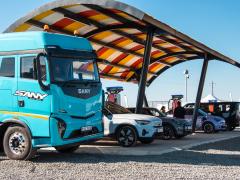
New opportunities are opening up in Africa outside of South Africa for logistics companies supporting the motor industry as manufacturing returns to the continent. Nigeria, Kenya and Morocco are firmly on the grid in the race to become manufacturing hubs rather than simply importers of used and new cars. This has clear implications for the South African motor industry, which will have to work hard to rebuild confidence after production was stopped for nearly two months by strike action. At the same time it creates opportunities for South African companies with automotive logistics expertise. Most recently Nissan and its West African conglomerate, Stallion Group, announced plans to increase vehicle assembly in Nigeria. Stallion currently produces commercial vehicles in Nigeria, and capacity will be increased to 45 000 cars, light duty trucks, pickups and vans a year. Capacity at the plant will also be opened to Nissan’s Alliance partner Renault, according to the companies. “Nissan is preparing to make Nigeria a significant manufacturing hub in Africa,” said Nissan president and CEO, Carlos Ghosn at the announcement of the plans. In Kenya, a start-up auto firm that is offering US$6 000 cars designed for African roads has started assembling at the Kenya Vehicle Manufacturers (KVM) based in Thika, central Kenya. At US$6 000, the car is cheaper than a four-yearold second-hand Toyota which sells for around $10 000 in Kenya, and new models that cost upwards of $23 000. Currently, over 35% of the vehicle’s cost is sourced domestically and Mobius Motors is looking to grow local content beyond 40%. Chinese assemblers are also showing interest in Kenyan assembly, which is supported by a combination of manufacturing incentives and import tariffs. Chery Automobile and Beiqi Foton Motors are both reported to be planning assembly plants.
Africa challenges SA’s manufacturing dominance
Comments | 0
© Now Media. This content is protected by copyright and may not be adapted or republished. If you would like to discuss cooperation opportunities, please contact: editor@freightnews.co.za.