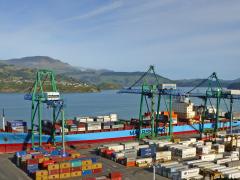
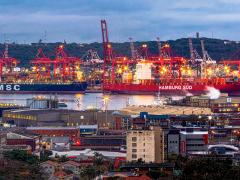
Namibia has paved the way for international logistics companies to invest in the country, according to Johny Smith, chief executive officer of the Walvis Bay Corridor Group. This is in line with recommendations in the Logistics Master Plan developed for the country. The Master Plan, which is currently in draft form, sets targets for 2025. Cargo volume to the landlocked areas of SADC is targeted to increase from the current 0.8 million tons to 3.6 million tons by 2025. By 2045 the volume is expected to reach 14.5 million tons. If the expected growth in cargo happens, the proportion of transport and storage to GDP will increase from 2.5% to 4.6% in 2025, making logistics one of the major industries in Namibia. Employment in this sector will more than double, going from about 26 000 at present to about 58 000 in 2025, according to the report. Investment will be clustered around logistics hubs, according to Smith. The objective is to focus on sophisticated value-added logistics rather than simply putting up warehouses, distribution centres and truck depots. Namibia is an attractive destination for investors from South Africa and the rest of the world because it has all the right elements in place, he says. At a policy level the government focuses on logistics in its latest development plan. The plan is taking physical form through investment in the port of Walvis Bay and upgrades to the rail and road infrastructure, as well as the airports. He says the Walvis Bay Corridor Group will facilitate the establishment of private public partnerships in order to attract private sector funding into essential logistics services such as rail and road. Plans to link Walvis Bay to the Copperbelt in Zambia and the Democratic Republic of Congo by rail are well advanced, but will probably need to be funded through such partnerships, he says. A rail link from Botswana to Walvis Bay also provides an opportunity for private sector investment. There are also opportunities in the provision of services such as training to the industry. The right skills will have to be in place in order to support the planned growth of the logistics sector in Namibia. Government has recognised this need and working visas are available for those bringing scarce skills into the country. Investors should approach the WBCG for assistance, he says. “We at the WBCG have a good relationship with the Ministry of Home Affairs and Immigration, which is a member.” INSERT & CAPTION WBCG will facilitate private public partnerships in order to attract private sector funding into essential logistics services. – Johny Smith
WBCG looking for international investors
Comments | 0
© Now Media. This content is protected by copyright and may not be adapted or republished. If you would like to discuss cooperation opportunities, please contact: editor@freightnews.co.za.