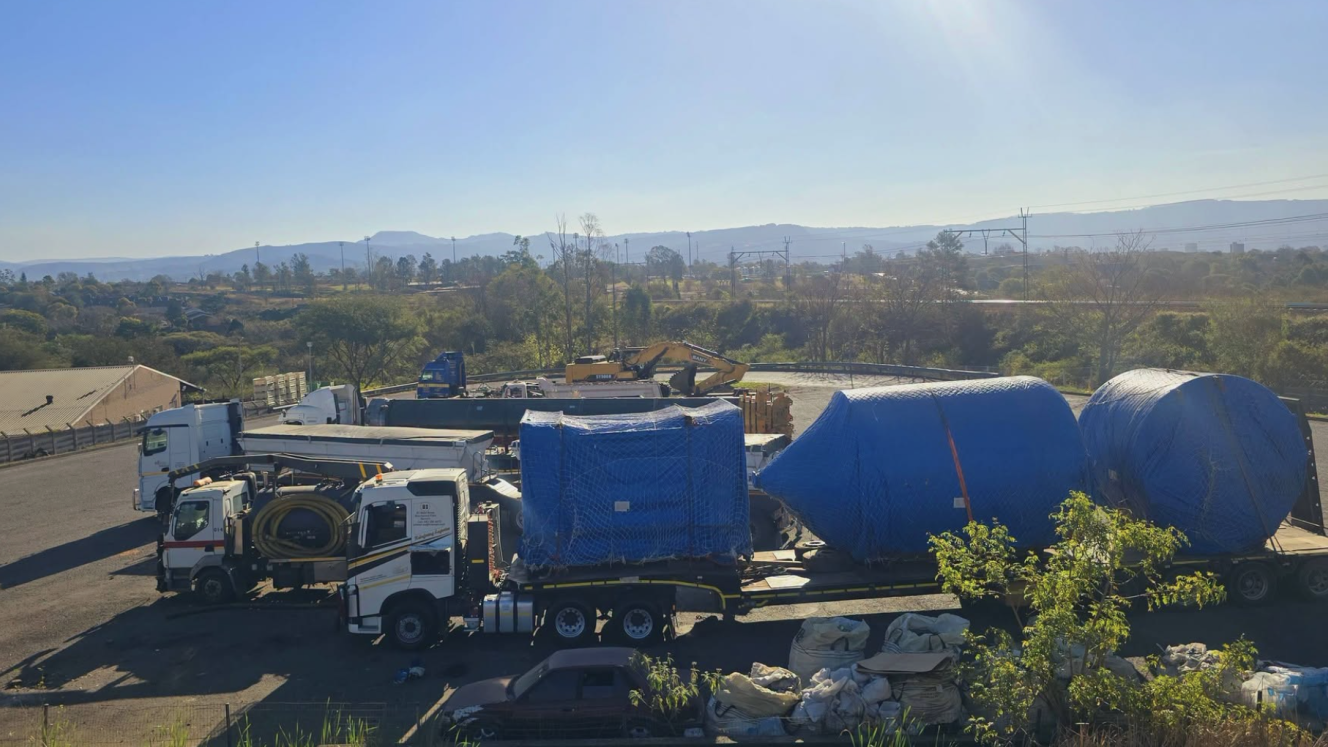
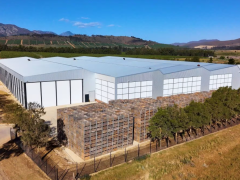
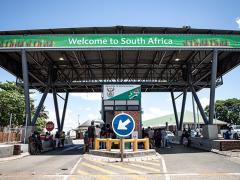
The new R3.4-billion container terminal at Walvis Bay could see it placing further competitive pressure on SA ports, according to Ron Frick, MD of DAL Agency – which acts for Deutsche Afrika Linien (DAL) in the SA Europe Container Service (Saecs). “It is very impressive,” he told FTW after a recent visit there. “And, once complete, I am sure it will compete, for example, with Coega as a transhipment hub.” And the plans for this new terminal certainly make for interesting reading. It has been designed as a trade hub for the region with Namport’s strategy centred on adopting a hub-andspoke distribution model for transhipment serving the South, Central and West African coastline and a gateway for transit traffic for the Southern African Development Community (SADC) landlocked countries. It also provides the shortest direct route to Europe and the Americas. Namport also sees Africa’s potential for growth being quite high and expects freight demand to double by 2020 and increase by a factor of six by 2040. Transit traffic from landlocked countries is expected to increase by 10-14 times over the next 30 years. And for the SADC, this traffic will increase from 13 million tonnes to 148m. The new terminal is currently being constructed on 30 hectares of new land being reclaimed from the channel at Walvis Bay, a project that is scheduled for completion in February next year, followed by the quay walls by April and the construction of revetment by August. China Harbour Engineering Company (CHEC), which is constructing the terminal, said the Phase 1 work is on schedule for completion in 2017. The expansion includes the construction of a modern container terminal, adding 600 metres of quay length to the existing 1 500m and will add 650 000 TEUs per annum capacity to the existing 350 000 TEUs – totalling 1 000 000 TEUs. Phase 1 of the project, according to the Namport port engineer, Elzevir Gelderbloem: “will improve our port services at least until 2020 when we will have to undergo the same process again.” This, he added, will enable the port to take advantage of the congestion and poor productivity in Eastern and Southern African ports (Mozambique, Angola and to a lesser extent SA). “There will be a particular concentration on that West African coastline because of Walvis Bay’s prime position,” said Frick. “But it could also see pendulum carriers on the Far East-South America trade making a deviation from Coega. “With Walvis having a future draught of 14m plus, it will also be able to accommodate these larger ships. “Transhipment costs, however, will be the final decider.” Frick also suggested that it would certainly make the port scenario on the tip of Africa that much more interesting. “It will add an extra option,” he said. He saw Walvis remaining dominantly an export port. “It mainly concentrates on heavy 20 foot (6 metre) boxes carrying commodities like minerals.” And, if the TransKalahari and TransCunene Corridors develop, Frick felt that Walvis Bay would add to its advantages. “Cargo,” he said, “like water, flows where there is least resistance. “And, for countries that have to bypass others to get to SA ports – for example the DRC, Zambia, Angola and Malawi – Namibia faces less of such resistance. “Being able to reduce this bureaucratic muddle will certainly add to its attraction.” CAPTION Walvis Bay competing for transhipment traffic … transit traffic from landlocked countries is expected to increase by 10-14 times over the next 30 years.
Walvis pumping up the competitive pressure
Comments | 0
© Now Media. This content is protected by copyright and may not be adapted or republished. If you would like to discuss cooperation opportunities, please contact: editor@freightnews.co.za.