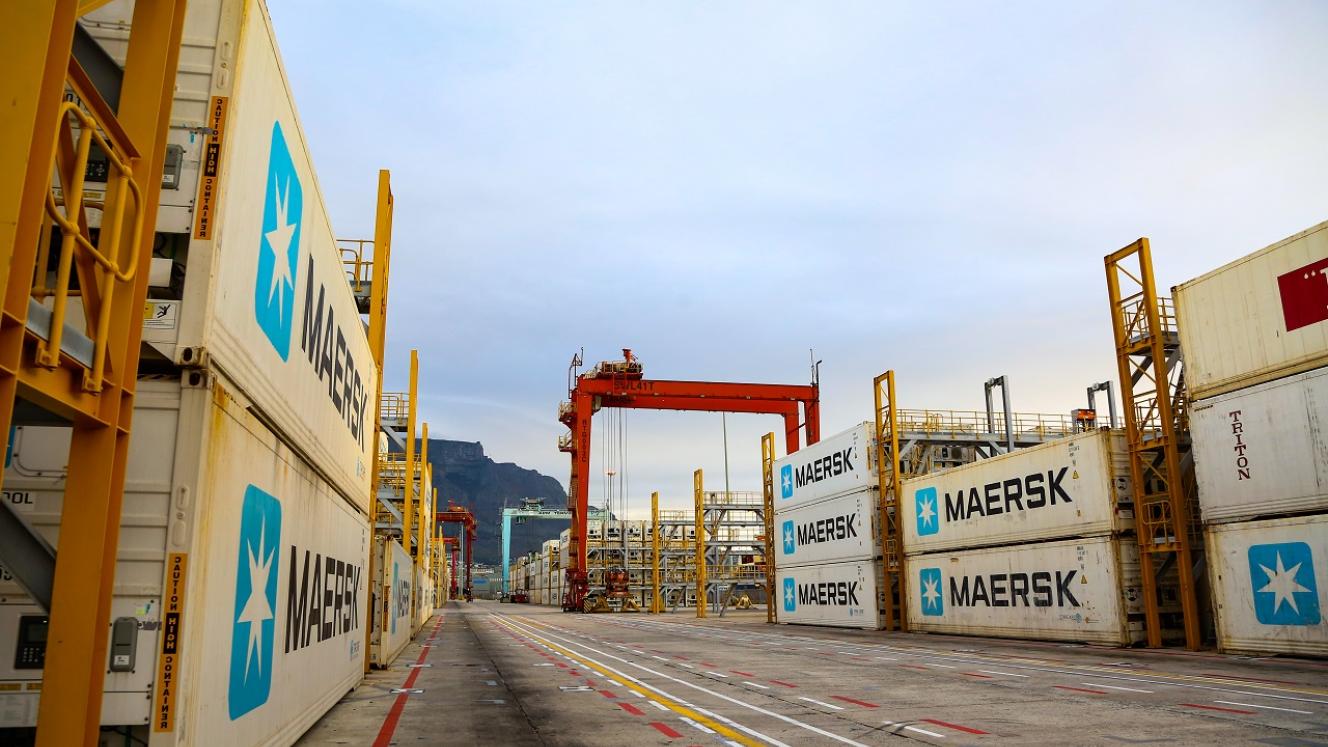
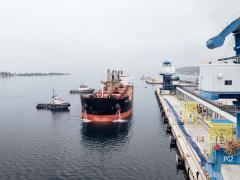
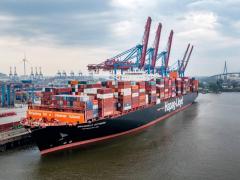
Creative engineering solutions have provided additional container handling capacity in the port of Walvis Bay. A combination of dredging and sheet piling on the one side, and the addition of a bollard sunk into the small craft harbour on the other has opened up sufficient wharf space to accommodate two 220-metre-long vessels at a time, according to Christian Faure, the executive for marketing and strategic business development at Namport. The channel has been dredged to 14.4 metres, and the berths to 14 metres draught. This will cater for the 3 500-TEU vessels operated by CMA-CGM, and Maersk’s 4 500-TEU WAFMAX service. The container handling facilities are being “optimised” to increase capacity to 355 000 TEUs a year – up from the peak of 260 000 TEUs handled by the port during the boom years. In addition to paving the container terminal, Namport has invested in six rubber tyred gantries. “This has added 20-30% to the capacity,” he says. The containers can be stacked up to five high. Productivity has also been improved through the introduction of the Navis management system. The port will be able to stage 15 000 TEUs at a time. These steps provide breathing space ahead of planned expansion of the port – which will be necessary when planned rail links through to Angola and the port of Luderitz Bay, as well as between Gauteng and Walvis Bay start operating. More capacity is also being created for bulk exports, with the upgrading of the fluorspar and salt handling facilities, and the building of a warehouse for cement exports. “We are expecting to export around 200 000 tons a year for Ohorongo Cement. This will be the first time that Namibia has exported cement,” he says. Other commodities being catered for are sulphur and marine phosphates, with the prospect of iron ore as well. A sizeable deposit has been found near Walvis Bay by prospectors looking for uranium. The giant Ohorongo factory came on line in 2010. Other investments in the pipeline include grain silos and a facility to handle bulk edible oils. Space has also been identified for a car terminal to handle the importation of second-hand vehicles – an opportunity that has been created by South African regulations which require that all second-hand imports bound for neighbouring states are transported off wheel. “The focus is on diversifying. We are fighting above our weight,” he says.
Walvis Bay configured for growth
Comments | 0
© Now Media. This content is protected by copyright and may not be adapted or republished. If you would like to discuss cooperation opportunities, please contact: editor@freightnews.co.za.