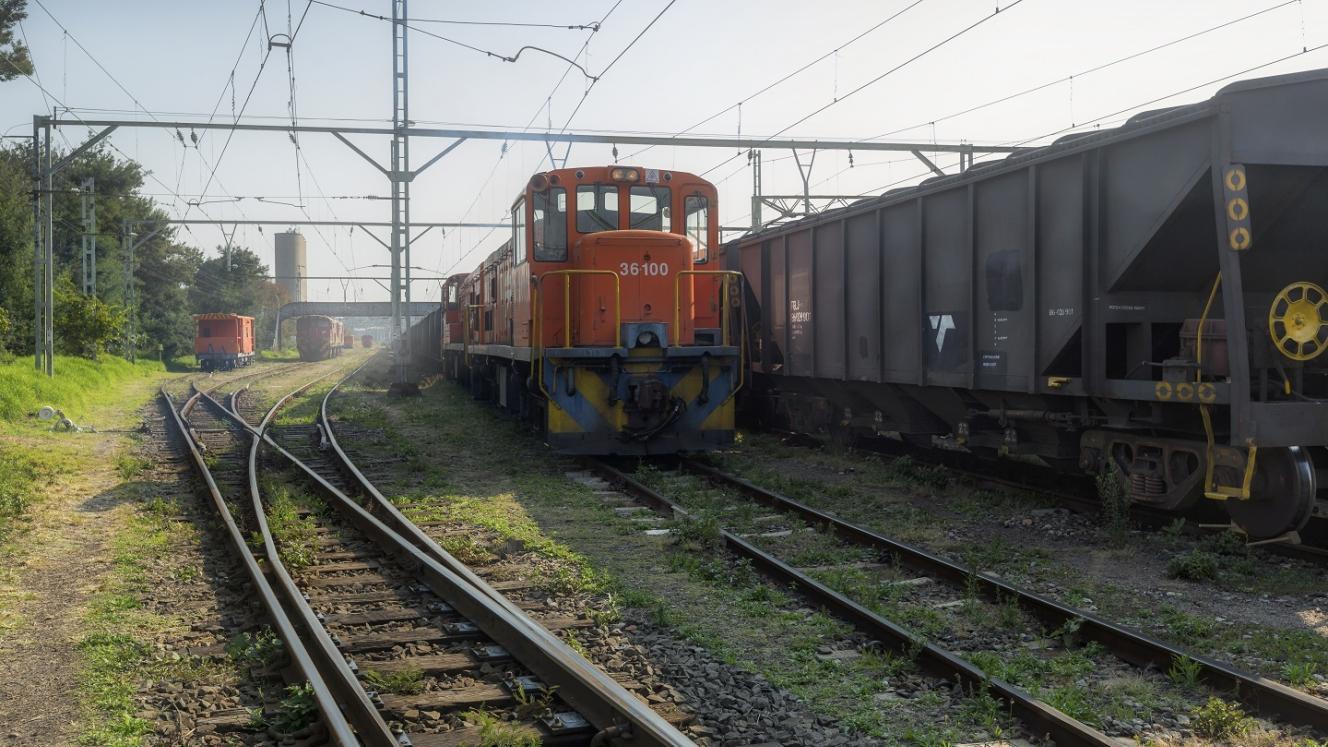
Transnet SOC Limited has withdrawn a confined tender process for the direct supply and delivery of railway rails.
The withdrawal follows an urgent High Court application filed by local supplier Guma Solutions, which challenged Transnet’s decision to restrict the procurement process to international original equipment manufacturers (OEMs).
Guma’s attorney, Nicqui Galaktiou, told Freight News on Tuesday that the state-owned freight logistics utility had notified the applicant’s legal team in writing that it was withdrawing the confined procurement process.
Transnet confirmed the withdrawal to Freight News.
“Transnet has revised its sourcing strategy for rails, hence the withdrawal of the RFP,” the company said.
“Transnet remains committed to a fair, transparent, and legally compliant procurement framework that balances operational requirements with localisation and transformation objectives.”
According to court papers, Transnet had not yet finalised a tender award, although it had previously indicated that evaluations would be concluded by August. The withdrawal meant the RFP, as issued, would not proceed.
The withdrawal follows a legal stand-off in the Gauteng High Court (Johannesburg) between the Transnet Rail Infrastructure Manager (TRIM), Transnet and Guma Solutions after the rail manager issued a confined market enquiry request for proposal on April 15 for the direct supply and delivery of railway rails.
According to court papers, The bid mechanism limited participation to international original equipment manufacturers (OEMs), excluding local intermediary suppliers and distributors from bidding. This exclusion prompted Guma Solutions to launch an urgent two-part application on April 29. Guma sought an interim interdict under Part A to restrain Transnet from closing, evaluating or adjudicating any bids received under the confined tender. This was intended to halt the process pending a full administrative review under Part B to set aside Transnet’s decision to restrict the procurement exclusively to OEMs on the grounds that it was allegedly unlawful and unconstitutional
The Black Business Council (BBC) said on Friday, May 15, it had instructed its attorneys to join the legal action as amicus curiae (friend of the court), alleging that the tender confined participation exclusively to six foreign manufacturers based in China, Austria, Japan, Spain, France and the United Kingdom.
“Not a single South African supplier, whether African, Coloured, Indian or White, has been invited to participate,” the BBC said.
“This is a direct violation of the constitutional (section 217) and legislative framework (localisation and industrialisation) governing how public money is spent in this country and an affront to every South African business capable of fulfilling the requirements of this tender.”
Guma Solutions CEO Deon van der Walt said in court papers that by confining the tender exclusively to international OEMs, Transnet had allegedly stripped local intermediary suppliers of their right to participate. He contended Guma would face “severe prejudice” due to its permanent loss of a chance to bid on the critical 24-month state contract.
Van der Walt said the balance of convenience weighed in Guma’s favour because it had a clear right under Transnet's own Procurement Manual to be treated as a capable historical supplier and should not be arbitrarily locked out of the market.
Transnet initially signalled its intention to defend the mechanism, filing an answering affidavit by TRIM general manager: supply chain, Basani Duiker, who highlighted the urgency of the tender.
“For purposes of this short term and urgent tender, Transnet has elected to invite bids from the actual manufacturers of the railway rails directly (referred to as Original Equipment Manufacturers… as opposed to utilising importers or middle-men (like Guma),’ Duiker said.
Duiker further defended the exclusion, saying the request for proposal for the tender was issued to a select number of OEMs.
“Guma is not an OEM. It is an intermediary supplier to Transnet under previous contracts (including the tender immediately preceding the tender) to supply railway rails,” Duiker said.
“As an intermediary supplier under those contracts, Guma procures railway rails from an OEM and resells them to Transnet (presumably at a mark-up). Guma was not invited to bid for an award of the tender for the simple reason that it was not an OEM.”
Transnet argued that an operational crisis left it with limited replacement track, warning that an interdict would cause “devastating safety and economic implications”.
The BBC earlier said it had written to the Ministers of Transport, Finance, and Trade, Industry and Competition calling for urgent ministerial oversight of Transnet’s procurement model and its compliance with the Constitution, the Public Finance Management Act and B-BBEE legislation.