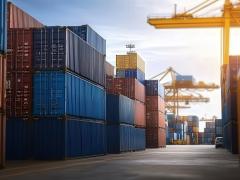
Domestic intermodal
traffic presents the single
biggest opportunity for
Transnet Freight Rail and
a switch from road could
save South Africa R4
billion a year in transport
costs and 1.2m tons in
emissions.
That’s according to selfconfessed
rail evangelist,
Professor Jan Havenga of
the logistics department
of the University of
Stellenbosch, who believes
that while there have been
major improvements in
rail transport over the
past few years, domestic
intermodal remains an
under-exploited growth
opportunity.
Havenga was one of
a panel of speakers who
addressed last week’s
logistics breakfast
jointly hosted by the
Johannesburg Chamber of
Commerce and Industry
and the SA Shippers
Transport and Logistics
Council.
“A lot of progress
has been made on the
mineral side and for
semi-beneficiated cargo
that moves from siding to
siding. But the problem
lies with intermodal. If
you look from a global
perspective that’s the
saving grace of most first
world railways – it’s where
most of the traffic is and
where most of the money
is made.
“At TFR the hinterland
movement of international
traffic is receiving
attention, and that's good
news. We need to work on
why we stuff and destuff
freight in Durban – and
it’s not only about the
perceived inefficiencies of
rail. Not only can you do it
more cheaply
if you do it
correctly you
can also take
congestion
out of the
port and the
N3.”
Havenga
would
however
like to see
stronger
focus on
domestic intermodal traffic.
“The Intermodal
Association of North
America talks of 16 million
boxes a year – and two
years ago the domestic
intermodal share of
these boxes surpassed
international intermodal.
This is a massive
opportunity for us on
Capecor and Natcor.
“At the moment there are
125 billion ton kms on our
corridors – equal to half of
all general freight in South
Africa. Half of that sits on
two corridors – the N1 and
N3. TFR has a massive
opportunity to develop a
better solution.”
Havenga concedes that
not all of that cargo should
go on rail – but 50%
should move by rail which
currently has 23% corridor
market share.
“If you
analyse it
25 million
tons should
have moved
on rail
already. At
15 billion
ton kms
that equates
to a R4bn
saving for the
economy.”
And while Havenga has
been hammering home
the message for the past
20 years, he believes the
tide is turning. “Today
there is focus, strategy and
collaboration. I’m looking
forward to a South Africa
with at least 50% fewer
trucks on our corridors.”
INSERT & CAPTION
Domestic intermodal
is a massive
opportunity for us on
Capecor and Natcor.
– Professor Jan Havenga
'TFR could help save SA R4bn a year'
Comments | 0
© Now Media. This content is protected by copyright and may not be adapted or republished. If you would like to discuss cooperation opportunities, please contact: editor@freightnews.co.za.