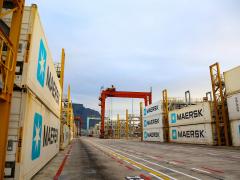
A devastating cyclone, recording wind speeds of 180 kmph, recently left the port city of Visakhapatnam, India, in tatters. Images of uprooted trees and electricity poles leave us thinking about disaster recovery planning and the precision and discipline required to restore normality to chaotic situations. We often take everyday supply for granted – supply of things like food, communication networks and transportation systems. But after a virtual collapse like this, it becomes evident that the quality and detail of any disaster recovery planning becomes paramount. Sean Pyott, chief financial officer for the Eikos Group of companies, suggests that disaster recovery plans should be reviewed on a regular basis as the information in them can quickly become redundant. “The key to good planning is mandating the correct staff members in your plan to use their own initiative and experience to restore order. You simply cannot plan for every eventuality but you can select competent people, task them with certain aspects of the plan and give them the tools to make use of when applying their own judgement,” says Pyott. The South African regulatory landscape dictates that all financial services companies operating in this jurisdiction have disaster recovery plans in place. But it seems prudent governance for all companies, especially those operating in the transportation and logistics environment, to plan, record and appropriately store their responses in the event of a catastrophic event. Supply chains are extremely sensitive and disruption in continuity can have significant impact on revenues. In an era of unprecedented environmental risk, it certainly makes sense to spend some quality time scenario planning and identifying the key personnel that will be there to restore order at the coal face.
TALKING INSURANCE
Comments | 0
© Now Media. This content is protected by copyright and may not be adapted or republished. If you would like to discuss cooperation opportunities, please contact: editor@freightnews.co.za.