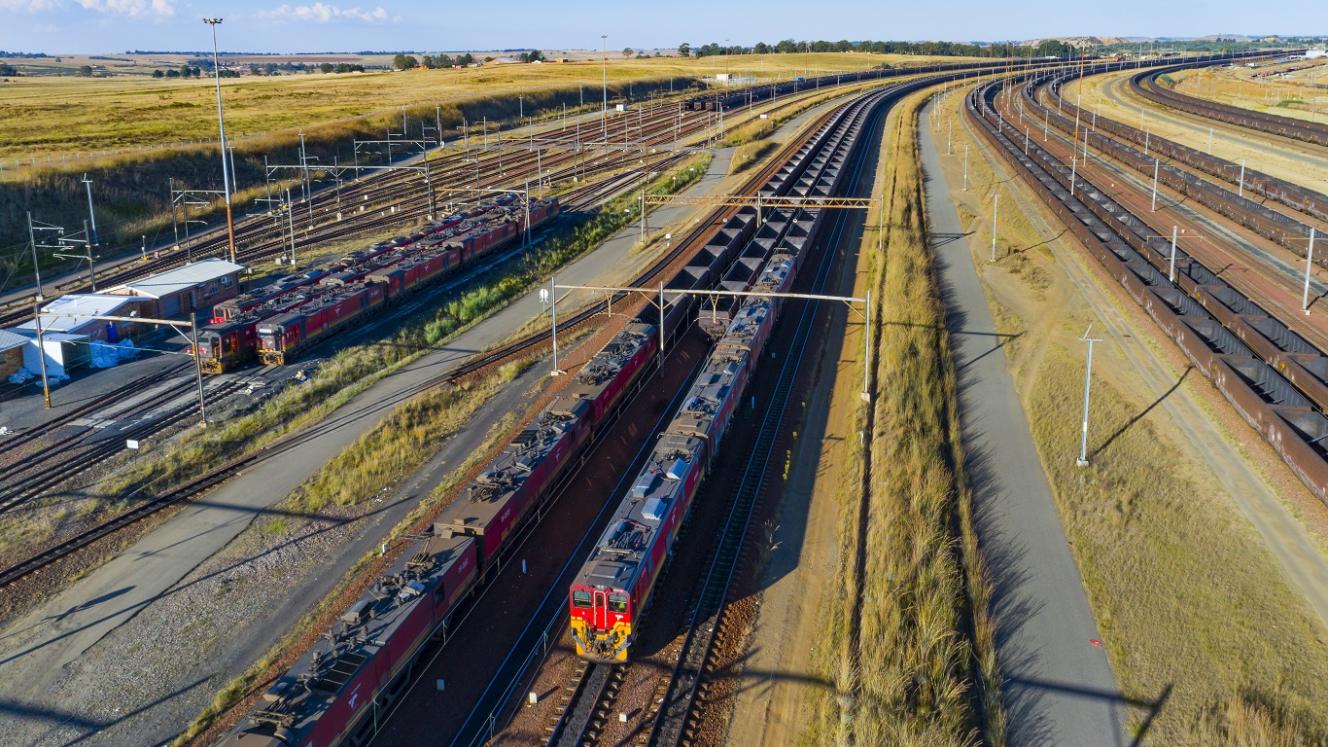
CARBON FOOTPRINT is increasingly influencing global trade relationships and South Africa’s drive to shift freight back onto rail seems to be in line with this ecological imperative. “South Africa’s carbon footprint is currently disproportionate to the size of the country,” says Nomad Freight director Simon Avis. “The carbon footprint generated by freight on rail as opposed to that of road is potentially far more ecologically friendly, because the rolling resistance of rail’s metal-on-metal is lower than that of rubber-on-road. “In South Africa you can get between 7 and 12 tonnes per axle on road vehicles, while rail can handle 26- 30 tonnes per axle,” adds John Matthew of Transwerk. He also points out that rail’s payload-deadweight ratio is greater and thus more economically and environmentally efficient than that of road. Road freight currently dominates market share, with only 20% of cargo moving on rail. Arguments for road suggest that rail’s transit times cannot compare with those of road, yet Avis simply states: “You must compare volume with volume, and not train versus truck.” Rail’s major hurdle seems to lie with availability and condition of wagons and locomotives, while road’s thorn is its dependence on infrastructure rehabilitation and maintenance. Transnet Freight Rail (formerly Spoornet) has embarked on an ambitious upgrade programme involving the acquisition of 404 new locomotives at a cost of R4.9bn. The problem with existing wagons lies with the condition of the wheels, and as Avis admits: “Wagon wheels are both sexy and sophisticated.” TFRs current fleet of locomotives is 65% electric with the remainder running on diesel. Matthew adds: “Renewable sources of energy like hydro and wind power will contribute to an increasingly positive audit on the carbon footprint of rail in the future.”
Support for rail fits well with global green shift
Comments | 0
© Now Media. This content is protected by copyright and may not be adapted or republished. If you would like to discuss cooperation opportunities, please contact: editor@freightnews.co.za.