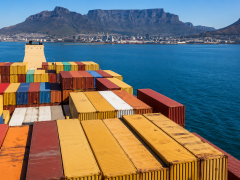
Protecting the South African economy against illegal trade has to be balanced against easy importing and exporting procedures, says Gene Ravele, chief officer Customs and Border management at the South African Revenue Service (Sars). “In line with international standards, Sars seeks to properly apply Customs law and ensure compliance with other legal and regulatory requirements,” said Ravele at the annual Saaff conference in Ekurhuleni last week. “The objective is to do so whilst ensuring the maximum facilitation of international trade and travel. This requires a balance. On the one hand there are measures that can cut the ‘red tape’ and simplify trade and travel. On the other there are those that are necessary to ensure the safety and security of our economy and society.” He said underlying its regulatory philosophy was the commitment by Sars to ensure that compliance measures, or Customs controls, were kept to the minimum necessary to achieve Customs’ objectives. “Rather than being a simple ‘gatekeeper’ treating every transaction and movement in the same way, we have to ensure that the level and nature of our controls is proportional to the risk involved and that they involve an appropriate combination of audit- and movement-based controls,” said Ravele. “Sars has made, and continues to make changes that will improve trade. A country’s supply chain is its lifeline to global trade. The more effective our supply chain, the more we enhance our competitiveness in global trade.”
Sars walks a fine line between protecting and facilitating
Comments | 0
© Now Media. This content is protected by copyright and may not be adapted or republished. If you would like to discuss cooperation opportunities, please contact: editor@freightnews.co.za.