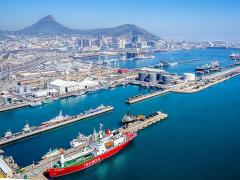
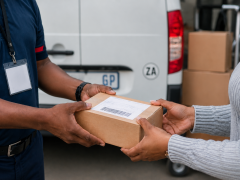
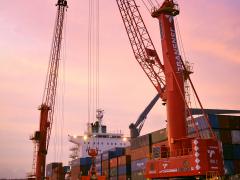
SACD Freight has embarked on a major expansion drive in Cape Town that will see warehousing space almost doubling as it relocates to a new facility. The company’s lease on the existing site terminates in January 2011 and work has commenced on a 20 000m2 highracked warehouse on 7.6 hectares of new land in the Transnet National Ports Authority industrial site adjacent to the harbour. “We’ll focus on food grade exports with a strong IT system component backing it,” managing director Graham Peinke told FTW. The idea was always that TNPA would take over the SACD property and incorporate it in the container terminal, according to Peinke. The food grade export focus will fit well with the company’s growth in the wine export market – as well as canned goods and fruit juices. “Some 18 000 teus of wine are exported annually. We take about 6% of it and it’s a market that has shown phenomenal growth – from 25 million litres in 1992 to 309 million litres currently, which is why SACD believes that its R165 million investment will be well spent.” The company is also keeping a close watch on developments at Coega where it has been in talks with the Coega Development Corporation with a view to setting up a new operation in the region. But it’s early days and along with many others SACD is adopting a wait and see attitude before making the investment. Its PE facility is currently kept busy as the sole handler of beer imports into the country until the opening of a new brewery in March next year – and even then it expects to continue importing some beer and other products. The company’s Durban facility has also reached a point where existing premises are fully utilised and it has been looking for expansion opportunities. “We’ve been in discussion with TNPA for a few years on finding new ground close to the container terminal. While nothing has materialised, the slump in the market has taken some pressure off,” says Peinke. “We thought that by 2010 we would need new premises but this may have shifted out by a year or so.”
SACD to almost double warehouse capacity
Comments | 0
© Now Media. This content is protected by copyright and may not be adapted or republished. If you would like to discuss cooperation opportunities, please contact: editor@freightnews.co.za.