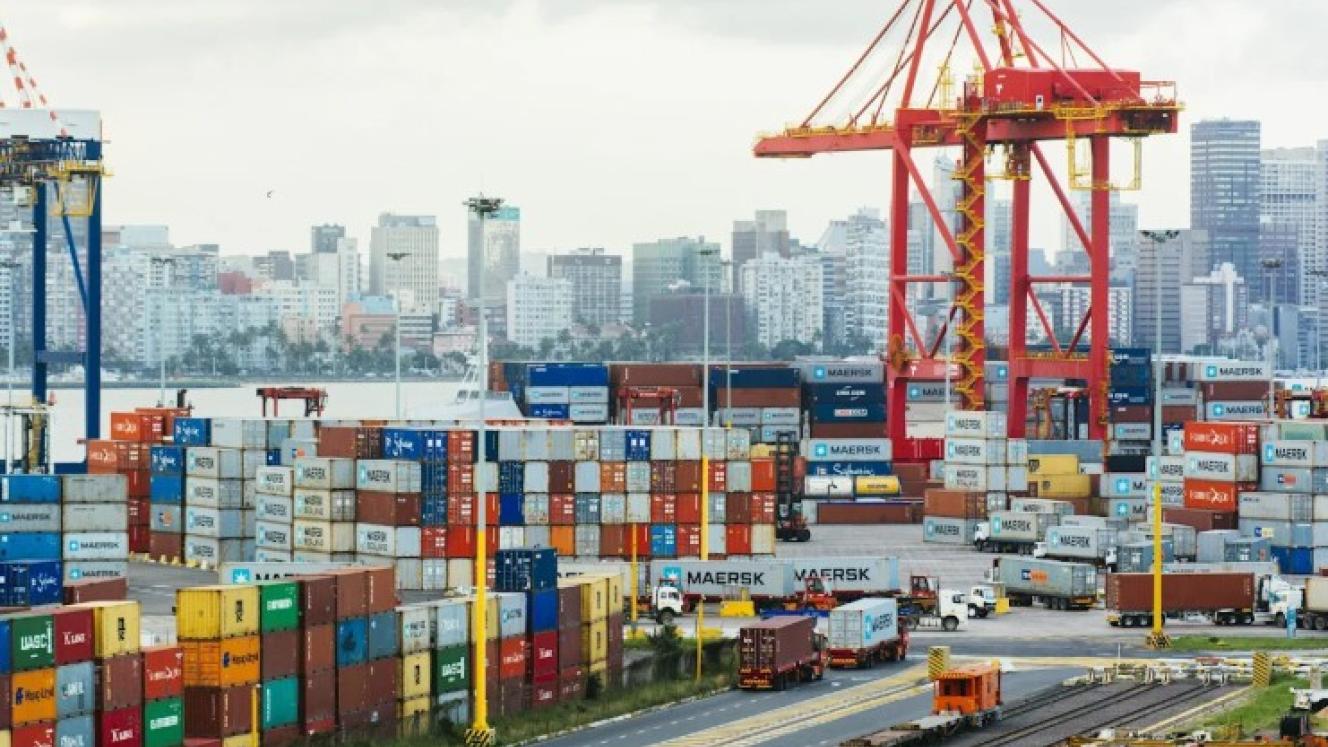
South Africa’s commercial container terminals reported a 9% surge in overall weekly port volumes, which pushed the total to 75 462 TEU for the week ending November 30.
But equipment availability continues to hamper operations, particularly at the Port of Durban.
This is according to the latest Cargo Movement Update report released by the South African Association of Freight Forwarders and Business Unity South Africa.
An average of 10 780 TEU were handled per day, marking a significant increase from the previous week’s 9 865 TEU.
However, despite this robust performance, operational shortcomings and infrastructure failures continue to impede the national economy. “Port operations were mainly impacted by adverse weather, vacant berths, as well as equipment challenges and shortages,” the report says.
Cape Town Port Terminals were particularly hard-hit by the elements, and the Cape Town Container Terminal was severely impacted, “conceding over 40 operational hours this week” due to persistent adverse weather conditions, the report says.
At the Port of Durban, equipment availability proved to be the primary operational constraint. At the Durban Container Terminal (DCT) Pier 1, critical ship-to-shore crane availability sat “roughly at 50% for the week”, while rubber tyred gantry availability hovered at “roughly 60%”. At DCT Pier 2, straddle carrier availability was only “roughly at 59% during this period”, the report says.
The figures for rail transport painted a bleaker picture.
Transnet Freight Rail’s performance suffered significantly as the annual shutdown of the ConCor line continued until late on November 27. This planned maintenance led to a significant drop in cargo movement.
Rail cargo handled out of Durban plummeted by 42% compared to the previous week, with just 1 725 containers moved. The inability to clear the container backlog by rail led to congestion in the already-strained port stacks.
According to the report, strengthening logistics is a foundational requirement for improving productivity, expanding trade, and lifting South Africa’s medium-term growth trajectory. For the country to capitalise on its port-side volume growth, it must first fix the deep, structural faults that plague its ability to move freight effectively.