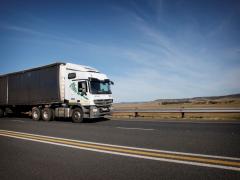
A domestic intermodal system where logistics is more efficient, with more collaboration between role-players and stakeholders is crucial to the country. According to Professor Jan Havenga from the Logistics Department at the University of Stellenbosch, a new system will not only change how freight is moved domestically but also address escalating logistics costs. “Currently most of our domestic freight is moved by road, and almost all FMCG, which is the largest domestic freight market segment. If we develop new domestic container terminals situated in the right positions we could move more freight domestically via rail and make a significant impact on costs.” He says unless change is brought to the system South Africa is looking at a logistics crisis in the next few years. “Our sums just don’t add up. We cannot continue moving our freight the way we do at present.” Havenga believes a domestic intermodal system will make a major difference. “We just cannot move more goods by road. Currently there are almost 3 000 trucks on the N3 between Johannesburg and Durban per day. By the year 2044 – if we do nothing to the current situation – that number will be around 12000 trucks a day. How do you build a road that takes that kind of truck traffic? You can’t. Even if we move all rail-friendly freight to rail by 2044 we will still need nearly 6 000 trucks per day. 12 000, however, is unthinkable and impossible.” He says a collaborative approach will be required to ensure the success of a domestic intermodal system. “It means that all the role-players need to come to the table and concessions will have to be made by all. Both the public and the private sector will have to work hard to make collaboration work and both will have to give leeway to the other for the bigger goal to be achieved – that of more efficient logistics.” According to Havenga, by optimising and using more rail major gains can be made in terms of cost. “That does not mean that road transport has no role to play. We are just going to have to move railfriendly cargo to rail to ease the pressure on the road system first and foremost, and then to address cost. Also, the improvement in the carbon footprint of logistics should be considered.” Also think about the land use required for major road expansion. “It is proven that the space required per ton per kilometre is less on rail than on road,” he says. “Rail for large volume loads between high density cities, such as Cape Town, Gauteng and Durban, is cheaper. That has been proved all over the world,” he says. “To make it work locally though there will have to be cooperation and collaboration on a grand scale.” He says state-owned enterprises such as Transnet would in the long run have to look at their rates to make it more viable to move goods to rail, while the private sector would have to find ways of lowering additional costs to ensure a more cost-effective environment. The state would also have to create a supportive regulatory environment relating to road to fix the ongoing cost debate and enable public private partnerships. “Until we do all these things we are not going to get this right. We have to find the right framework for public private partnerships.”
SA must change or face logistics crisis
Comments | 0
© Now Media. This content is protected by copyright and may not be adapted or republished. If you would like to discuss cooperation opportunities, please contact: editor@freightnews.co.za.